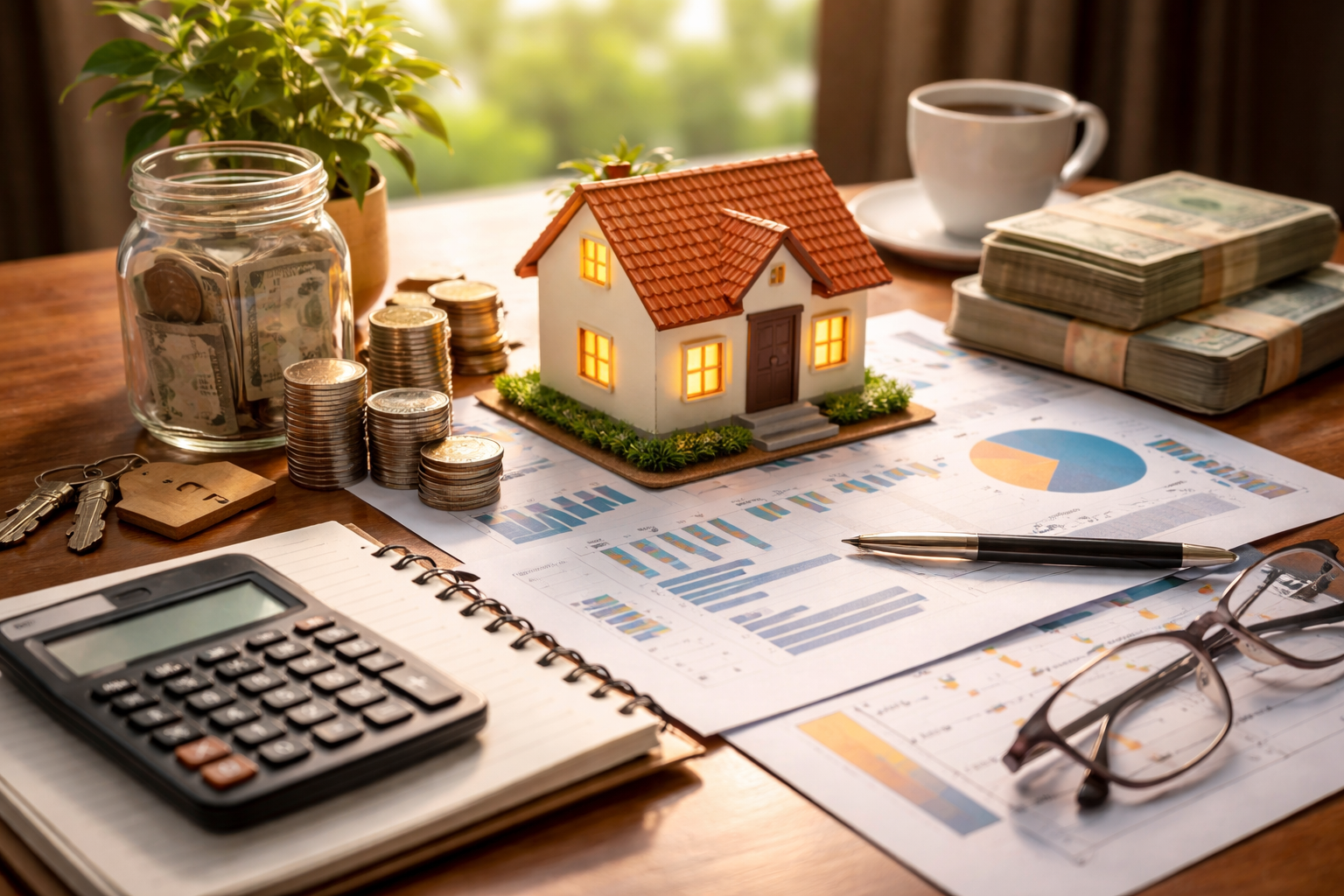
Real Estate Financial Planning for Homebuyers in India: A Complete Guide

Buying a home is one of the biggest financial decisions most Indians ever make. From deciding how much you can afford to strategizing your home loan, planning EMIs, and treating property as a long-term asset every step requires careful financial planning. In this guide, we’ll walk you through a practical financial roadmap so you can make confident and informed decisions while planning your dream home with developers like Reliant Housing or any reputable real estate brand.

1. How Much Home Can You Afford? Understand Your Financial Capacity

Before you start browsing properties or attending Reliant Housing site visits, the first question to ask is:

How much can you really afford without jeopardizing your financial stability?

A. Evaluate Your Current Financial Situation

Begin with a simple calculation of your:

  • Monthly net income
  • Monthly expenses
  • Existing debts
  • Savings and investments

This forms the foundation of your home loan budgeting and EMI planning India.

B. Set a Realistic Budget

A common rule of thumb:
Total home purchase price should not exceed 3–5× your annual gross income.

For example:

  • Annual income: ₹12 lakh
  • Affordable property range: ₹36 lakh – ₹60 lakh

This helps keep your EMI obligations within a comfortable range.

C. Don’t Forget Down Payment

In India, minimum down payment required by most banks is 15%–25% of the property price. For example, on a ₹50 lakh home:

  • Down payment (20%): ₹10 lakh
  • Loan amount: ₹40 lakh

This is a crucial part of home loan budgeting and sets the tone for your long-term financial plan.

2. EMI vs Income Ratio: The Golden Rule for Homebuyers

A major part of Real Estate Financial Planning is ensuring your Equated Monthly Installments (EMI) don’t strain your monthly finances.

A. What is EMI?

EMI is the fixed amount you pay every month to repay your home loan. It consists of principal + interest and is a function of:

  • Loan amount
  • Interest rate
  • Loan tenure

B. Ideal EMI to Income Ratio , India Standard

In India, most financial experts recommend:
EMI should not exceed 30%–40% of your monthly net income

Example:

  • Monthly income: ₹80,000
  • Maximum EMI: ₹24,000 – ₹32,000

Staying within this range ensures you don’t compromise on necessities, savings, or investments.

C. Why This Ratio Matters

Keeping your EMI proportionate protects you from:
✔ Overleveraging
✔ Compromised lifestyle
✔ Poor retirement savings
✔ Increased financial stress

This ratio is central to home loan budgeting and should guide property selection, whether you’re eyeing a premium Reliant Housing project or another locality.

3. Home Loan Strategy: Choose Smart to Save Big

Home loans are powerful tools, but they need to be managed smartly.

A. Choose the Right Loan Mix

Home loan strategy depends on:

  • Interest rate type (fixed vs floating)
  • Tenure
  • Pre-payment options
  • Part-payment flexibility

B. Fixed vs Floating Rates

Fixed interest rates offer predictability.
Floating rates may start lower but fluctuate with market changes.

As part of effective home loan budgeting, evaluate interest rate trends and choose the type that aligns with:
✔ Your risk tolerance
✔ Future income expectations
✔ Market outlook

C. Loan Tenure: Short vs Long

  • Long tenure (20–30 yrs) = lower EMIs but higher interest cost
  • Short tenure (10–15 yrs) = higher EMIs but lower total interest

Strike the right balance based on your capacity. This is a key part of EMI planning in India.

D. Pre-Payment & Part-Payment Strategy

Whenever you receive a bonus or windfall:

  • Consider pre-paying a part of your loan.
  • Reduces interest burden significantly.
  • Speeds up loan closure.

Many banks allow partial pre-payment without penalties always check terms before signing.

4. Property as a Long-Term Asset: More than Just a Home

In India, property is not just a place to live it is one of the most powerful long-term investment assets.

A. Real Estate Appreciation Over Time

Historically, residential property prices in key Indian cities have appreciated significantly especially in developing micro-markets and established locations. Buying early often means benefiting from capital appreciation as infrastructure and demand grow.

For example, a property bought in an emerging locality near metro lines, IT corridors, or planned business hubs often outperforms expectations.

B. Rental Income Potential

If you ever decide to move, your property can generate steady rental income turning a fixed asset into a recurring revenue source. This is central to property investment planning.

C. Tax Benefits on Home Loans

India offers tax deductions under:

  • Section 80C – principal repayment
  • Section 24(b) – interest on home loan

These benefits reduce your tax liability and enhance overall returns from your investment.

D. Selecting the Right Developer Matters

Choosing a reputed developer with strong delivery track record, like Reliant Housing, adds confidence to your investment. Quality construction, timely delivery, and trusted certifications ensure your property gains value over time and attracts a good resale or rental price.

5. Real Estate & Retirement Planning: An Overlooked Advantage

Many Indians underestimate the role property plays in retirement planning. But with thoughtful planning, your home can secure your golden years.

A. Clearing Home Loan Before Retirement

Aim to close your home loan before retirement so your fixed income isn’t burdened by EMIs. A loan-free home reduces monthly expenses significantly when income reduces.

B. Rental Income as Retirement Income

If you choose to downsize later:
✔ Sell a part of the property
✔ Rent the existing property
✔ Use rental proceeds for monthly expenses

This becomes a key component of retirement income planning.

C. Reverse Mortgage Option

Once you’re above 60, many banks offer reverse mortgage loans. This allows senior citizens to:

  • Convert home equity into monthly income
  • Continue living in the house

This strategy injects stability into retirement finances.

6. Practical Homebuyer Checklist: Be Financially Ready

Here’s a step-by-step checklist to streamline your financial plan:

A. Pre-Purchase Phase

✔ Assess income & expenses
✔ Calculate affordable budget
✔ Check CIBIL score (aim for 750+)
✔ Decide down payment capability
✔ Compare interest rates & loan options
✔ Visit projects like Reliant Housing and shortlist

B. Loan Application Phase

✔ Get pre-approved loan offer
✔ Read fine print carefully
✔ Calculate EMIs using online EMI calculators
✔ Lock interest rate if beneficial

C. Post Loan Disbursement

✔ Begin EMI payments on time
✔ Set up auto-debit
✔ Plan annual pre-payments
✔ Track property appreciation

7. Avoid These Common Homebuyer Mistakes

To strengthen your property investment planning:

❌ Buying beyond affordability
❌ Ignoring hidden costs (stamp duty, registration, taxes)
❌ Choosing longest tenure without strategy
❌ Not comparing loan offers
❌ Overlooking future income changes

Avoiding these protects your financial future.

8. Conclusion: Plan Smart, Live Happy

Real estate financial planning isn’t just about buying a roof over your head , it’s about securing your future. With disciplined home loan budgeting, thoughtful EMI planning in India, and smart investment foresight, your property can become one of your strongest financial assets.

Whether it’s your first home, an upgrade, or an investment property near good locations developed by reliable names like Reliant Housing, thoughtful financial planning ensures:

  • Peace of mind today
  • Financial security tomorrow
  • A valuable legacy for your family

Best Floor & Direction for Flats | Vastu Floor Selection Guide 2026

Buying a flat is one of the biggest financial and emotional decisions in life. Beyond price, location, and amenities, two factors strongly influence long term satisfaction and resale value: floor selection and flat direction. Many Indian buyers search for the best floor to buy a flat while also considering vastu direction for flat layouts, especially north facing flat benefits.

This detailed guide combines Vastu principles with practical urban living insights, helping you choose the right floor and direction for comfort, health, and future appreciation.

Importance of Floor Selection in Flats

Floor selection is not only about view or prestige. It impacts ventilation, noise levels, safety, maintenance, and even daily lifestyle convenience. Lower floors usually provide easy access, while higher floors offer privacy and better air circulation. However, the best floor to buy a flat depends on personal needs, family structure, and city conditions.

From an investment perspective, mid to higher floors often command better resale prices in metro cities. Families with elders or small children may prefer lower to mid floors for safety and accessibility. Understanding these differences helps buyers make an informed floor selection guide instead of choosing randomly.

Vastu for Flat Direction Explained Simply

Vastu Shastra focuses on balancing natural elements like sunlight, airflow, and energy direction. While modern apartments have fixed structures, direction still plays a major role. The vastu direction for flat determines how sunlight enters, how air circulates, and how positive energy flows.

According to Vastu, north and east facing flats are considered most auspicious. They receive ample natural light and are associated with prosperity and good health. South and west facing flats are not bad, but they require careful planning of interiors and entrances.

North Facing Flat Benefit

Among all options, north facing flat benefits are widely discussed. A north facing flat receives consistent daylight without harsh heat, making it energy efficient and comfortable throughout the year. According to Vastu, the north direction is ruled by Kubera, the god of wealth, symbolizing financial growth and stability.

Practically, north facing flats stay cooler during Indian summers and reduce electricity usage for cooling. They are ideal for home offices, students, and families seeking a calm living environment. Because of high demand, such flats also enjoy better resale value.

East Facing Flats and Morning Energy

East facing flats allow early morning sunlight, which is considered highly positive in Vastu. Exposure to morning rays supports better health, sleep cycles, and productivity. Many buyers prefer east facing flats for spiritual reasons, especially those who follow daily rituals or meditation routines.

However, in very hot cities, east facing flats may become warm early in the day. Proper balconies, curtains, and ventilation planning can solve this issue, making them a strong alternative to north facing units.

South and West Facing Flats Reality Check

There is a common myth that south or west facing flats are always inauspicious. In reality, vastu direction for flat should be evaluated with layout, entrance placement, and room usage. South facing flats can be excellent if the kitchen, bedrooms, and entrances follow correct vastu alignment.

West facing flats often provide beautiful sunset views and are suitable for people who return home late in the evening. With modern insulation, reflective glass, and smart design, heat concerns can be managed effectively.

Higher vs Lower Floors: Practical Comparison

Choosing between higher vs lower floors is a key part of the floor selection guide. Higher floors offer better views, less street noise, more privacy, and improved air quality. They are ideal for professionals, couples, and investors focused on premium living.

Lower floors provide convenience, faster evacuation, and easier access during power outages. Families with elderly members often prefer lower floors due to reduced dependency on lifts. Security, parking proximity, and garden access are also advantages.

Mid Floors: The Balanced Choice

For many buyers, mid floors represent the best floor to buy a flat. They balance accessibility with privacy, reduce noise, and still provide decent views. Mid floors are also safer during emergencies compared to very high floors and remain cooler than top floors.

From a resale perspective, mid floors appeal to a wider buyer segment, making them a practical long term investment option in most residential projects.

Climate Considerations in India

Climate plays a major role in deciding the best floor and direction. In hot regions like Rajasthan or Gujarat, north and east facing flats on mid floors remain cooler. In humid coastal cities, higher floors help avoid dampness and mosquitoes while improving ventilation.

In colder regions, south facing flats may provide better warmth. Understanding local climate patterns ensures that vastu principles align with practical comfort instead of working against it.

Noise, Pollution, and Safety Factors

Lower floors near busy roads may experience more noise and dust. Higher floors are quieter but may feel isolated for some residents. Safety is another concern. While higher floors reduce theft risk, emergency evacuation becomes more challenging.

Modern projects by trusted developers like Reliant Housing address these concerns with advanced safety systems, soundproofing, fire compliance, and efficient lift management, making floor choice more flexible.

Investment and Resale Value Perspective

From an investment viewpoint, direction and floor both influence property value. North and east facing flats usually appreciate faster due to higher demand. Premium floors with open views attract luxury buyers and tenants.

However, affordability matters. A well planned mid floor west or south facing flat in a quality project can outperform poorly designed north facing units. Project quality, builder reputation, and location remain equally important.

Buyer Recommendations for Smart Decision

Before finalizing, visit the flat at different times of day. Observe sunlight, airflow, and noise levels. Ask about lift backup, fire safety, and maintenance plans. Use a realistic floor selection guide instead of relying only on myths.

If vastu direction for flat is important to you, consult a professional but also evaluate practical lifestyle needs. A balanced approach leads to long term satisfaction

Common Mistakes Buyers Should Avoid

Many buyers rush decisions based only on direction labels without checking actual site conditions. A north facing flat blocked by another tower may receive less light than expected. Similarly, top floor flats without proper insulation can become extremely hot. Ignoring these realities leads to regret later.

Another mistake is ignoring future surroundings. An open view today might disappear after nearby development. Always check the master plan and surrounding zoning. Lift count, maintenance quality, and society rules matter as much as floor number.

Legal and Documentation Considerations

While choosing the best floor to buy a flat, ensure that the floor is legally approved in building plans. Unauthorized floors or modified layouts can cause issues during registration or resale. Always verify occupancy certificates, fire clearances, and structural approvals.

Banks also prefer lending on floors and units that comply with sanctioned plans. A vastu perfect flat loses value if documentation is weak. Reputed developers like Reliant Housing follow strict compliance, reducing such risks.

Lifestyle Based Floor Selection

Working professionals may prefer higher floors for quiet evenings and scenic views. Families with children might enjoy lower floors with easier access to play areas. Senior citizens often feel comfortable on lower or mid floors with quick exit options.

Your daily routine should guide your decision more than trends. Think about groceries, parking access, pet movement, and emergency response. The right choice improves quality of life every single day.

Long Term Living Comfort

A flat is not just an investment but a living space for years. Balanced sunlight, good ventilation, manageable noise, and easy access contribute to mental and physical wellbeing. When vastu principles align with practical design, the result is harmonious living.

Choosing wisely today ensures peace of mind tomorrow, making your home a source of stability, growth, and happiness. Ultimately, informed decisions create better homes. Combine vastu wisdom, modern planning, and trusted builders to secure a flat that supports comfort, prosperity, and long term value for your family always with confidence today.

Role of Trusted Developers

Choosing the right floor and direction becomes easier when the project is thoughtfully designed. Developers like Reliant Housing integrate Vastu friendly layouts with modern architecture, ensuring optimal ventilation, safety, and comfort across floors.

Their projects focus on real life usability rather than just brochure claims, helping buyers find the best floor to buy a flat without compromise.

Final Thoughts

There is no single perfect answer for everyone. The best floor to buy a flat depends on family needs, budget, climate, and lifestyle. Vastu provides guidance, while practical considerations ensure daily comfort. By understanding north facing flat benefits, comparing higher vs lower floors, and considering climate impact, buyers can make confident decisions. A well chosen flat becomes not just a home but a long term asset.

If you are planning to buy a home and want expert guidance on floor selection, vastu direction for flat planning, and investment value, explore residential projects by Reliant Housing. Their customer focused approach and future ready designs help you choose a home that truly fits your life.

Impact of Jaipur metro on the real estate market

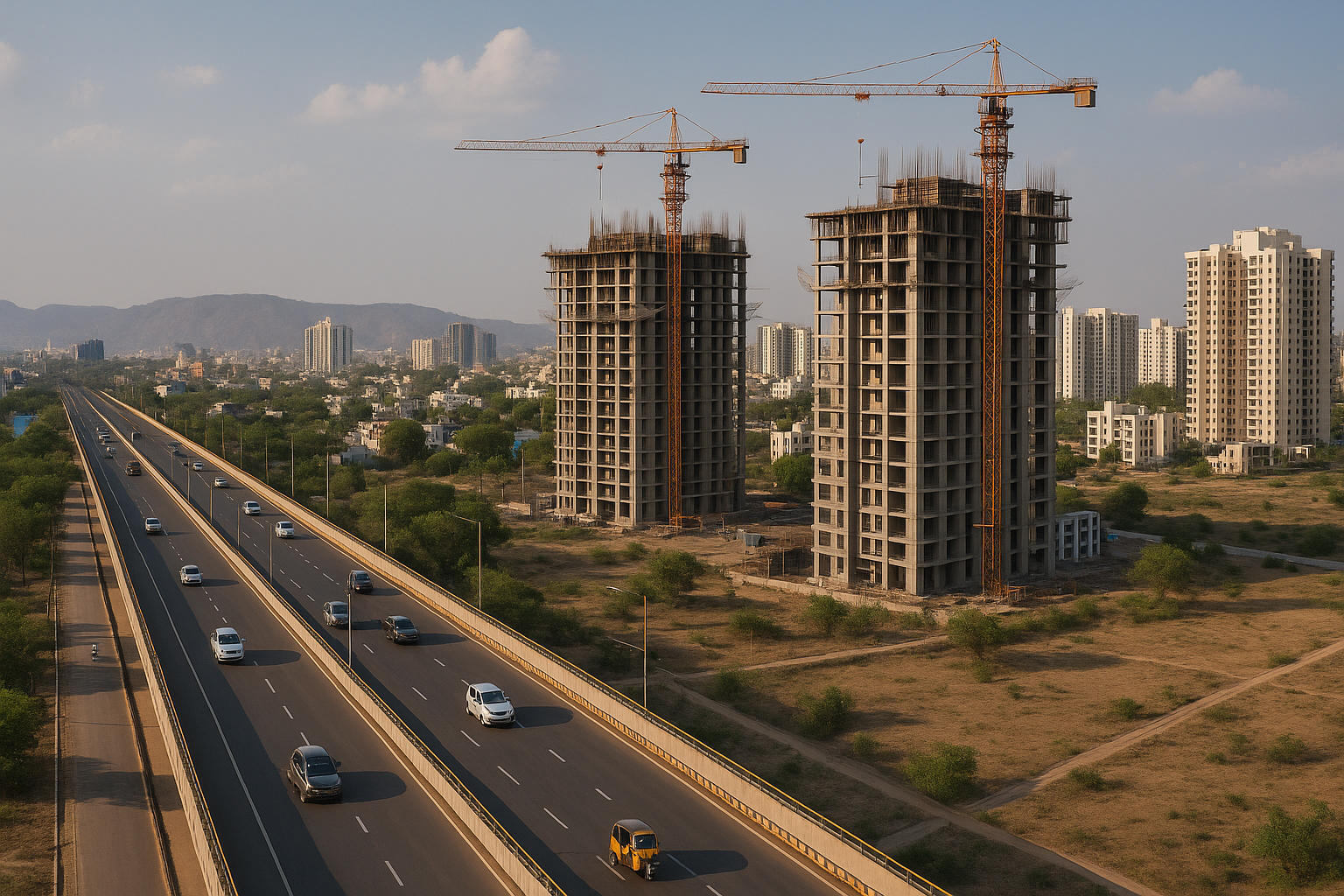
Jaipur the Pink City. A city known for its rich heritage, vibrant culture, and as an emerging investment destination is now undergoing a dramatic transformation in its urban infrastructure. With the Jaipur Metro rolling out in phases and new transit projects reshaping mobility, the real estate landscape is evolving rapidly. For buyers, sellers, and investors alike, understanding the connection between transit development and property prices is not just smart, it’s essential.

In this blog, we’ll explore why transit projects like the Metro can significantly affect property values, which areas have benefitted or will benefit the most, and how savvy real estate decisions right now can unlock major long-term gains.

Transit Infrastructure & Real Estate: What’s the Connection?

There’s a powerful and widely recognized link between mass transit systems and property values. Globally and in India, real estate tends to appreciate in areas with strong public transportation networks and the Jaipur story is no different.

Studies show that properties located near metro lines often outperform the broader market:

  • Properties within 0–500 meters of a metro station can see price premiums in the 25–35% range once metro operations begin.
  • Homes within 500 meters to 1 km enjoy 15–25% premiums, and even those within 1–2 km notice 8–15% growth compared to regions without transit access.

This trend stems from improved accessibility, lower commute times, reduced transportation costs, and heightened demand from both end-users and investors.

Key takeaway: connectivity isn’t just about convenience it’s a value driver.

Jaipur Metro: Current Status & Future Potential

The Jaipur Metro project has been implemented in stages, with additional phases planned to expand connectivity across the city.

What’s Already Happening?

  • The Phase-1 Metro corridor (East-West) has been operational for some time, linking key zones like Mansarovar. Areas near these stations have witnessed noticeable price growth.

What’s Coming Next?

  • The Phase-2 corridor, a 42.8 km route from Todi Mod to Prahladpura has had its Detailed Project Report (DPR) approved and sent to the Ministry of Housing and Urban Affairs for central sanction. It will feature 36 stations, serving strategic residential, commercial, and industrial zones across Jaipur.
  • Longer-term mobility planning includes future phases (Phase-3 and 4) as part of a comprehensive mobility initiative to further strengthen transit networks.

This smooth rollout of planned expansions tells us something important: Jaipur is transitioning into a more connected, transit-oriented city and its property markets are responding fast.

How Property Prices Are Rising Along Transit Corridors

Why does metro connectivity boost property values?

Here’s what this infrastructure brings to the table:

➤ Reduced Travel Time & Cost

Living near a metro station means commuters rely less on private vehicles, saving time and money, a huge incentive for homebuyers and renters alike.

➤ Attracts More Buyers & Renters

Properties with transit access attract two types of people:

  1. End-users (families, working professionals, students) who prioritize commute convenience.
  2. Investors looking for stable rental demand and appreciation potential.

Because of this expanded demand, areas near metro corridors often enjoy both higher capital appreciation and better rental yields, a rare win-win scenario for investors.

➤ Improves Livability

Transit corridors often lead to secondary improvements:

  • Better roads
  • Enhanced street lighting
  • Increased commercial activity
  • More amenities like shops, schools, and clinics

All these upgrades cumulatively boost property desirability and price.

Which Areas in Jaipur Are Benefiting Most?

Here’s a snapshot of how Jaipur’s neighborhoods are responding:

High-Growth Zones With Metro Impact

Mansarovar

Already connected by Phase-1 of the metro, Mansarovar has seen steady demand from buyers and investors alike. The area’s central location and connectivity continue to attract premium valuations relative to older baselines.

Jagatpura

Initially pocketed behind mainstream growth corridors, this area is emerging as a hot choice due to metro expansion plans and relative pricing advantages.

Sitapura & VKI

Proposed metro connectivity and proximity to employment hubs position these regions as future real estate hotspots.

Tonk Road & Ajmer Road Corridors

Long stretches slated for transit upgrades and mixed-use development are drawing investor attention especially in commercial real estate and large residential communities.

Emerging Opportunities

Localities like Sikar Road, Rind Road, and areas around the airport are anticipated to command rapid price growth as metro plans become clearer and construction advances.

Transit-Oriented Development (TOD): The Next Real Estate Frontier

Jaipur isn’t just building metro lines, it’s planning how land can be developed around transit hubs. The city’s Transit Oriented Development (TOD) policy aims to create mixed-use zones within an 800-m radius of metro and transit stations. These TOD zones encourage:

  • A mix of residential, commercial, and institutional spaces
  • Walkable streets and vibrant urban zones
  • Higher floor area ratios (FAR) to optimize land use

This integrated planning boosts property potential far beyond simple metro adjacency setting the stage for smart, sustainable urban growth.

Real Estate Trends: Local Data & Growth Indicators

Jaipur’s real estate market has shown strong momentum in recent years:

  • Reports indicate nearly double-digit property price growth, with Jaipur emerging among the fastest-growing Tier-II markets.
  • Areas near transit corridors have outpaced the broader city growth, especially as buyers seek better connectivity and lifestyle options.

In simple terms: Jaipur’s metro and transit infrastructure don’t just change travel they rewrite property valuations.

Buyer & Investor Perspectives: What This Means for You

For Homebuyers

  • Prioritize properties within walking distance to metro stations these insights suggest notable appreciation and quality-of-life gains.
  • Consider emerging corridors rather than overly premium zones, which may already have priced in future growth.

For Investors

  • Metro corridors are predictable growth drivers, often delivering healthy demand for resale and rental markets.
  • Phase-2 and extended transit projects present a window of opportunity before prices fully adjust this is when smart investors enter.

Remember, timing matters: historically, the biggest gains in metro-linked property happen before and shortly after station operation due to early anticipation and demand shifts.

Challenges & Smart Investment Tips

While the outlook is generally positive, it’s important to be realistic:

Construction disruptions can temporarily affect rental yields and short-term market sentiment.
Project delays may stall appreciation expectations always verify timelines.
Speculation risk: buy based on planned infrastructure, not just rumors.

Smart approaches:

  • Analyze metro routes and station planning documents.
  • Watch for confirmed project funding and start dates.
  • Consider properties within 0–1 km radius from stations for best growth potential.

The Bottom Line: Metro = Momentum

Jaipur’s transit infrastructure, especially the Metro, is more than just transportation investment. It’s a catalyst for urban transformation. As shown by real data and comparable trends across Indian cities, proximity to efficient transit translates into real value for both homeowners and investors.

Whether you’re planning to buy your dream home or grow your investment portfolio, metro-related growth is a factor you can’t ignore.

Take Action Today : Build Your Future with Reliant Housing

If you’re looking to invest smartly in Jaipur’s booming property market, now is the time to act. The metro expansion and transit projects are creating long-term growth corridors and properties near these zones promise strong appreciation and rental demand.Explore exclusive residential and investment-grade properties with Reliant Housing. Our experts help you identify the best locations near transit corridors, understand market trends, and secure high-return real estate tailored to your needs.

📞 Contact Reliant Housing today and secure your piece of Jaipur’s future before prices rise further!

Stamp Duty, Registration & Property Taxes in Jaipur (2026 Guide)

Many buyers are confused about stamp duty, registration, and property taxes in Jaipur. Why, because they don’t know the latest rules. Before you buy your first home, read this guide.

If you are planning to buy your first home in Jaipur, Reliant Housing prepared a simple, easy-to-understand 2026 guide that will help you with whatever you need to know about stamp duty in Jaipur, property registration fees, tax rebates, and smart ways to save money.

What is Stamp Duty in Rajasthan?

Stamp duty is a government tax paid on property, and is paid by the buyer when they buy a property. This payment makes the documents valid and legal under the Rajasthan Stamp Act 1988. Generally, a standard INR 100 stamp paper usually costs around 130 INR in Rajasthan, as per the Government of Rajasthan.

The stamp duty in Jaipur is calculated on the percentage of the property value between:

  • The circle rate (guideline value) set by the government, or
  • The actual transaction value mentioned in the sale deed
Type of ownership Stamp Duty charges (%)Registration charges Labour cess
Male 6%1%20% of stamp duty
Female 5%1%20% of stamp duty
Joint ownership6%1%20% of stamp duty
  1. Why is Stamp Duty Important?
  • It is legally proof that confirms your property ownership
  • It will protect you in case of disputes
  • Enables easier resale or transfer
  • It is required for bank loans, and it is needed for mutation

If you are not paying stamp duty, then the property is not legally recognized.

  1. How to Calculate Stamp Duty in Rajasthan When Buying Your First Home

If you are buying a home, plot, or flat in Jaipur, the stamp duty payment is determined by the current government’s rates, property value, and the buyer’s eligibility for a rebate. It depends on various factors, like property age and property type, and the type of property.

  1. Stamp Duty Formula (Rajasthan)

Stamp duty is calculated on the property value

Stamp Duty Amount = Property Value × Applicable Stamp Duty Rate

Where property value = the higher of

  • Circle rate (DLC Rate), or
  • Agreement/transaction value

For example, suppose you are Prakash, who bought a property priced at ₹50,00,000

Stamp duty = 6% of ₹50,00,000

Hence, Prakash will have to pay Rs. 3,00,000 as stamp duty.

Registration charges explained 

Once you have paid stamp duty, the next step is property registration. This process is conducted at the Sub-Registrar’s Office (SRO), where your sale deed is permanently recorded. Registration charges are generally 1% of the property value in Rajasthan.

Document required for Property Registration

  1. Title deed/sales deed
  2. Buyer or seller ID proof
  3. PAN card
  4. Passport-sized photograph
  5. Chain of ownership
  6. Stamp duty receipt
  7. Property document
  8. Power of Attorney (if applicable)

Once all details are registered, you are officially and legally the owner of the property.

Reliant Housing guides homebuyers step-by-step process of documentation and registration, making the process easy and smooth.

Property Tax Rules in Jaipur

Property tax in Jaipur is collected by the Jaipur Municipal Corporation (JMC), and it is paid once a year by the property owner, including:

  • Residential house
  • Apartments and flats
  • Plot and vacant land
  • Commercial properties 

Tax (property) in Jaipur depends on:

Jaipur Municipal Corporation (JMC) gives you the online property tax payments, making it simple for homebuyers and investors without waiting in long queues.  

Stamp Duty & Registration Charges Concessions & Rebates (2026)

Stamp duty and registration charges in Rajasthan come with the state-level concession for women, senior citizens, and people with disabilities, giving you a central government tax benefit under Section 80C of the Income Tax Act

Section 80C a deduction of money up to ₹1.5 lakh can be claimed for stamp duty and registration charges in the financial year you pay them. In Rajasthan, men pay 6%, and women pay 5% stamp duty charges.

  1. Stamp Duty Rebate for Women Buyers

In Rajasthan, provide you with a stamp duty rebate for lower rates for women buyers to encourage property ownership, with simple benefits being 1% to 2% decrease and a cap amount paid by you.

Also, read the real estate regulations in India.

  1. Joint property purchase benefits

Some concessions may apply when you buy property with your joint spouse, this is depending on the state rules and the authority of the Rajasthan government.

  1. Affordable Housing & First-Time Buyer Benefits

Certain affordable housing projects and first-time buyers may receive:

  • Reduce stamp duty in the approved scheme
  • Low registration fee in select categories

Reliant housing make sure buyers know about any rebates before purchase. 

How to Save on Property Taxes & Charges in Jaipur

You can save on property taxes and fees in Jaipur by paying on time receive rebate, and claiming the available exemption by utilizing income tax deduction from your home loan. Here are some smart tricks to save on property taxes and charges of your home buying cost.

  1. Buy Property in Joint Ownership 

In many cases, joint ownership with women co-owner reduces stamp duty and charges significantly.

  1. Choose Properties in Approved Housing Projects

The Rajasthan government approved the Jaipur Development Authority (JDA) projects, which often come with tax benefits and simple approvals.

  1. Pay Property Tax on Time

JMC offers early-payment discounts in some years.

  1. Keep Documents Properly Updated

Avoiding penalties:

  • Property transfer 
  • Resale
  • Land mutation 
  • Loan processing

How Stamp Duty & Property Tax Affect Long-Term Ownership

Many homebuyers and investors focus only on the purchase price, but charges like registration fees, stamp duty, and property tax are equally important.

  • Plan according to your budget 
  • Avoid financial and legal issues
  • Make sure of an easier resale value
  • Manage clean ownership records

Property with clear documentation and up-to-date tax records is much easier to finance, sell, or transfer.

Why Jaipur is a Strong Market for Property Investment

Jaipur has rapidly emerged as one of the fastest-growing real estate hubs in Rajasthan. The real Estate Market observes evolution, along with the city’s growing infrastructure, increasing urban areas, and a strong business, investing in properties for investors in Jaipur.  

  • Increasing rental demand and new residential corridors
  • Ongoing Infrastructure development through metro projects, highways, etc.
  • More affordable prices and still budget-friendly as compared to metro cities.
  • Growing IT  hubs, tourism culture, and education.

If you are planning to buy a self-living or investment property, then you understand that charges like stamp duty in Jaipur and property registration fees help you make a good purchase decision. 

Why Choose Reliant Housing?

Choosing the right developer is as important as choosing the right location. When you are buying any physical assets, you are relying on the trust, accountability, and long-term vision of the seller. Reliant Housing has earned a reliable name in Jaipur’s real estate market due to

  • Document & registration guidance
  • Transparent pricing
  • Government compliance support
  • Assistance with tax & legal queries
  • Long-term property management clarity

Our goal is to make sure every buyer feels secure, informed, and confident when investing in their dream home.

Final thoughts

Home prices grab the attention of homebuyers and investors. Real investment planning needs to understand all the charges in real estate, including all property tax charges, maintenance fees, legal costs, stamp duty, and registration expenses.

When you are planning to invest in a property with clear documentation, trusted pricing, and a trusted developer, then explore the project by Reliant Housing, where dream

homes come with a complete cost plan and total peace of mind.

Impact of Infrastructure Development Property Prices Jaipur

How Metro, Highways & City Growth Are Shaping Jaipur’s Real Estate Market.

Jaipur’s property market is rapidly evolving driven strongly by infrastructure development property prices Jaipur, and creating one of the most promising real estate landscapes in North India. In this blog, we’ll break down every key factor buyers, investors, and home seekers must know, including metro impact, highway connectivity, area-wise price trends, resale value expectations, plot & apartment pricing, future outlook, and why Reliant Housing projects are standout options in this thriving city.

Infrastructure Development Property Prices Jaipur : What It Means

What is infrastructure development?
Infrastructure development refers to the building and upgrading of essential physical systems such as roads, highways, public transport, water systems, airports, and urban services that support economic growth and quality of life. In real estate, infrastructure directly influences property demand and prices the better the connectivity & amenities, the higher the value.

Examples of infrastructure development include metro rail projects, expressway expansions, ring roads, smart city programs, water systems, and public transit hubs.

Metro Project Jaipur Real Estate : A Price Multiplier

The ongoing Jaipur Metro expansion is reshaping property pricing patterns. As seen in other Indian cities, property values within walking distance of metro stations can command 20–30% price premiums compared to those without metro access.

How Metro Influences Price Growth

  • Connectivity: Metro links major hubs like Sitapura, airport corridors, Jagatpura, and central neighborhoods, increasing desirability.
  • Rental Demand: Homes near metro stations get more renters, boosting rental yields by up to 10–15%.
  • Future Appreciation: Neighborhoods along planned metro routes are forecasted to appreciate faster than others.

Highway Connectivity Jaipur Flats & Plots : Driving Demand

Improved highways and ring roads in Jaipur aren’t just easing travel they are directly lifting property prices by opening peripheral areas to the city’s real estate boom.

Key Highways Impacting Prices

  • Ring Road Expansion: Reduces travel time and is creating growth corridors along Ajmer Road & Tonk Road.
  • Expressway Access: Better connectivity to Delhi & other cities elevates both residential and commercial property demand.

Jaipur Property Price Trends : Numbers & Growth

Jaipur has seen impressive real estate growth:

  • Property prices in many areas have doubled or even tripled over the past decade, making it one of the highest appreciating Tier-2 real estate markets in India.
  • Weighted average prices of new projects rose by around 65% from 2023 to late 2024.
  • Recent data shows strong growth in Ajmer Road, Jagatpura, Tonk Road, and Mansarovar property values.

Area-Wise Property Rates in Jaipur

Here’s a snapshot of how infrastructure has influenced local rates:

Malviya Nagar, Jaipur Property Rates

Malviya Nagar remains a desired central location due to schools, hospitals, markets, and connectivity but infrastructure upgrades continue to push prices. Rates vary widely based on exact location, road width, and building age.

Popular Growth Zones

AreaCurrent TrendDriving Factor
Ajmer RoadHigh appreciationMetro + Ring Road + IT growth
JagatpuraStrong price gainsMetro proximity + job hubs
Vaishali NagarSteady growthEstablished residential area
Tonk RoadRising interestExpressway access
SitapuraDevelopment hotspotIndustrial employment center

Plot Price Benchmarks

Understanding land prices helps guide investment choices:

  • 1 gaj price in Jaipur: Varies per location and approval status (JDA/RERA plots vs non-approved).
  • 100 gaj plot in Jaipur price: Depends on infrastructure proximity; prime corridors command higher rates.
  • 150 gaj plot in Jaipur price: Premiums in areas near metro/major roads.
  • 200 gaj plot in Jaipur price: Best for builders or large family homes with future development potential.

Note: Always verify JDA/RERA approval before investing in plots to avoid legal issues or acquisition risks.

Flats, 1, 2, 3, 4 BHK & Studio Apartment Prices

Property choices today range from budget-friendly studios to upscale 3,4 BHK homes:

  • Studio apartments: Great for first-time buyers & renting.
  • 1 & 2 BHK: Popular among professionals and small families.
  • 3 & 4 BHK: Ideal for larger families or investment with high resale demand.

Prices vary by area but are strongly influenced by nearby infrastructure like metro stations, schools, and shopping zones.

Why Choose This Area : Beyond Connectivity

Infrastructure boosts more than travel convenience:
Better schools, hospitals, and social amenities
Higher rental demand & lower vacancy
Faster resale potential
Smart city improvements in urban planning

Resale Value & Future Outlook

Areas with strong infrastructure never go out of demand:

  • Metro-linked localities expect premium resale value.
  • Highway corridors outperform slower-connected zones.
  • Smart city & future employment hubs attract long-term buyers.
    Jaipur’s growth trajectory suggests continued price appreciation for well-located properties.

Why Invest with Reliant Housing in Jaipur

Reliant Housing projects are strategically positioned to benefit from Jaipur’s infrastructure evolution, offering:

1. Prime Locations

Projects with excellent road connectivity, close to metro corridors and major amenities.

2. Trusted Approvals

All plots and homes are JDA & RERA compliant ensuring legal safety and investment security.

3. Diverse Options

From budget-friendly studios and 1–2 BHK apartments to spacious 3,4 BHK homes and premium plots.

4. Future-Ready Infrastructure

Close to upcoming metro lines, highways, hospitals, schools, and commercial hubs maximizing convenience and resale value.

5. Resale Confidence

Properties part of Reliant Housing communities show higher buyer interest due to quality, location, and infrastructure synergies.

Conclusion : Jaipur Real Estate Is Infrastructure Led

The infrastructure development property prices Jaipur story is clear: connectivity drives demand, and demand drives prices. With metro expansion, highways, smart city projects, and growing employment zones reshaping Jaipur, this is an optimal time for homebuyers and investors alike to make informed decisions.

If you’re seeking high-growth potential properties from 100 gaj plot Jaipur price plans to 4 BHK apartments with future resale upside Reliant Housing offers offerings that match both convenience and long-term value.

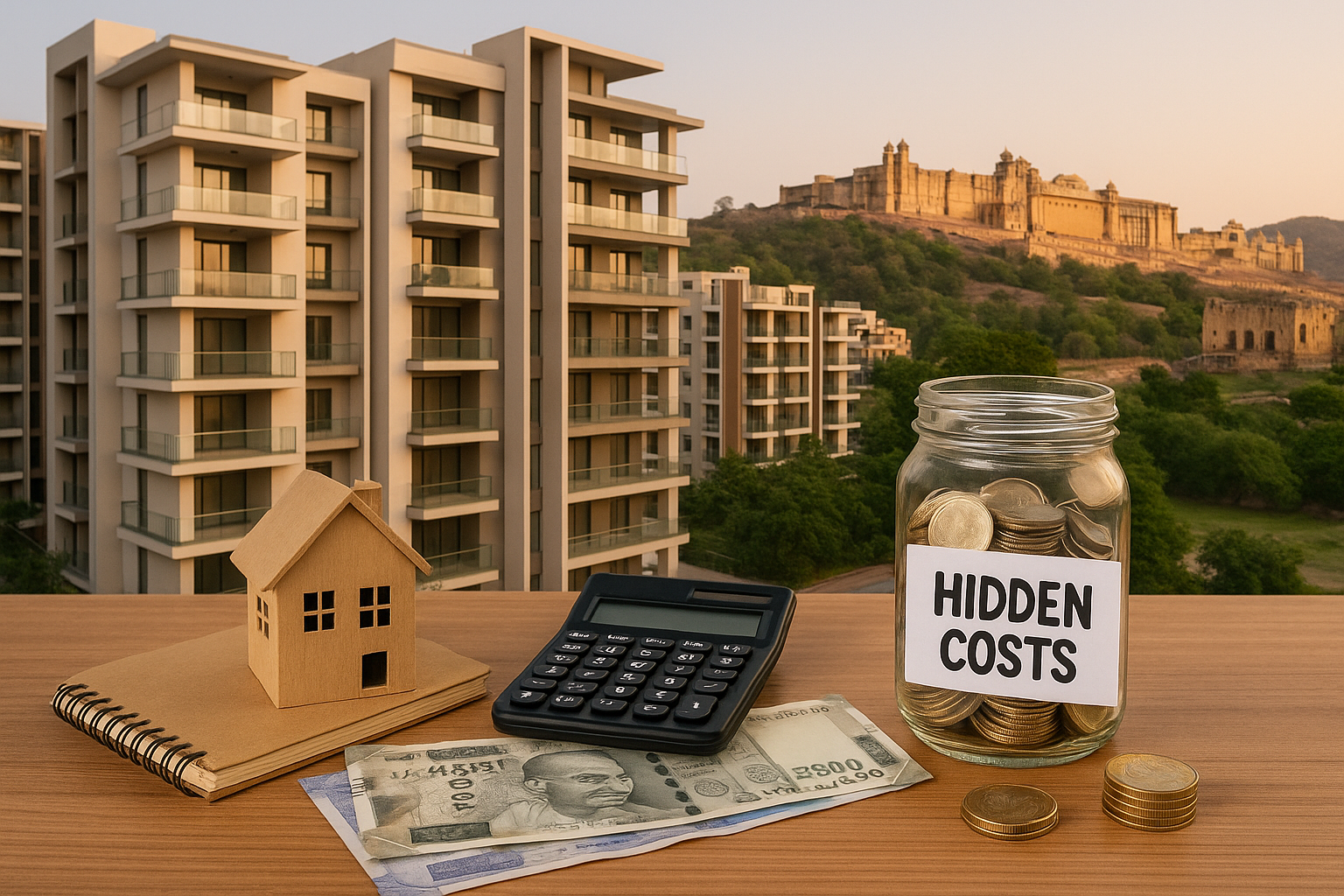
Budget for Buying a Flat in Jaipur: Hidden Costs You Should Know

Buying a flat in Jaipur is one of the biggest financial decisions for any family. Whether you are planning a 1 BHK, 2 BHK, 3 BHK, 4 BHK, or a studio apartment, setting the right budget is the first step toward a stress-free home-buying journey. But most buyers calculate only the basic flat cost and forget about several hidden charges, which later increase the total price significantly.

This detailed guide explains how to budget for buying a flat in Jaipur, all hidden costs you should know, the process of buying a flat from a builder, and why choosing Reliant Housing gives you long-term value, high resale, and affordable pricing.

Why Budgeting Is Important When Buying a Flat in Jaipur

Buying a home isn’t only about the base price. You must consider:

  • Hidden charges
  • Registration & stamp duty
  • Government taxes
  • Maintenance
  • Loan-related fees
  • Interior & shifting costs
  • Future expenses

A proper budget helps you avoid shocks later and ensures smooth financial planning.

How to Decide Budget for Buying a House in Jaipur

Before selecting a project, understand how much you can comfortably afford.

1. Calculate Your Affordable EMI

Ideally, your home loan EMI should not exceed 30–40% of your monthly income.

Example

  • Salary: ₹40,000 per month
  • Safe EMI = ₹12,000 – ₹16,000
  • Expected loan = ₹12–20 lakh approx.

This means:
“My salary is ₹40,000, should I buy a house?” – Yes, if you pick the right budget segment and a credible builder like Reliant Housing, offering affordable, RERA-approved homes.

2. Use a Flat Buy Calculator

You can use any rent vs buy calculator in Jaipur, rent vs sell calculator, or buying home vs investing calculator to understand long-term benefits.

In most cities, buying a flat wins in the long run because of:

  • Appreciation
  • Stable EMI
  • Zero rent stress
  • Better financial security

3. Check Your Down Payment Capacity

In India, banks finance 80–90% of the property cost.
You must pay:

  • 10–20% down payment
  • All hidden charges separately

How Much Does It Cost to Buy a Flat in Jaipur?

The base price shown in advertisements is only the beginning. Actual cost includes multiple hidden charges.

Hidden Costs in Flat Purchase in Jaipur You Must Know

These hidden costs increase your final price by 8% – 15%.

1. Stamp Duty & Registration Charges in Jaipur

These are government-mandated and vary state to state.

  • Stamp duty: 5–7% of property value
  • Registration charges: 1%

Total = 6–8% extra

2. GST on Flat Purchase

Applies ONLY for under-construction flats.

  • GST = 5% (regular homes)
  • GST = 1% (affordable housing)

No GST on ready-to-move-in flats.

3. Maintenance Charges in Jaipur

Builders typically charge:

  • ₹2 – ₹5 per sq ft monthly
    Plus:
  • One-time deposit of ₹25,000 – ₹1,00,000

Includes:

  • Security
  • Lifts
  • Clubhouse
  • Gym
  • Common area electricity

4. Parking Charges

Usually ₹1,00,000 – ₹3,00,000 depending on location & type.

5. Floor Rise Charges

Higher floors = additional ₹10–₹50 per sq ft.

6. Development Charges

Includes:

  • External development
  • Internal development
  • Infrastructure fees
    (Usually ₹1–₹4 lakh)

7. Legal Fees for Property Purchase

Advocate charges = ₹10,000 – ₹25,000 for:

  • Title check
  • Document verification
  • Agreement draft

8. Home Loan Charges

Banks may charge:

  • Processing fees: ₹5,000 – ₹10,000
  • Insurance: ₹20,000 – ₹50,000
  • Administrative fee

9. Interior, Furniture & Shifting Costs

Minimum starting:

  • Interiors: ₹2–₹5 lakh
  • Furniture: ₹1–₹3 lakh
  • Packers & movers: ₹10,000 – ₹30,000

10. Corpus Fund / Sinking Fund

One-time charge: ₹20,000 – ₹1,00,000
Used for future building repairs & upgrades.

How to Plan for Buying a Flat in Jaipur (Step-by-Step Guide)

Step 1 : Select the Right Location

Choose an area with:

  • Good connectivity
  • Schools & hospitals
  • High rental demand
  • Future appreciation

Step 2 : Research the Builder

Choose a RERA-approved, trusted builder like Reliant Housing, known for:

  • Clear titles
  • Zero hidden charges
  • On-time delivery
  • Affordable pricing
  • Strong resale value

Step 3 : Decide the Size of the Flat

Studio Apartment

  • 300–450 sq ft
  • Best for bachelor, small family, or investment

1 BHK

  • 550–700 sq ft
  • Good for working couples

2 BHK

  • 850–1200 sq ft
  • Most in-demand

3 BHK

  • 1300–1800 sq ft
  • Premium buyers & families

4 BHK

  • 2000–3000 sq ft
  • Spacious lifestyle needs

Step 4 : Review Total Budget (With Hidden Costs)

Formula:
Flat price + Stamp duty + Registration + GST + Maintenance + Interiors + Loan charges

Step 5 : Verify Legal Documents

Includes:

  • Title deed
  • Commencement certificate
  • RERA approvals
  • Encumbrance certificate
  • Sale agreement

Step 6 : Understand the Process of Buying a Flat From a Builder

  1. Site visit
  2. Choose unit
  3. Pay token
  4. Agreement for sale
  5. Home loan approval
  6. Registration & stamp duty
  7. Possession

Why Choose Reliant Housing?

1. Affordable Homes for Every Budget

Reliant Housing offers:

  • Studio apartments
  • 1 BHK
  • 2 BHK
  • 3 BHK
  • 4 BHK
    All designed for maximum space efficiency, ideal pricing, and modern lifestyle.

2. High Resale Value

Reliant Housing projects are located in fast-growing areas, ensuring:

  • Higher appreciation
  • Strong rental demand
  • Better resale returns

3. RERA-Approved Projects

Ensuring:

  • Transparency
  • Zero hidden charges
  • Legal clarity

4. Best-in-Class Amenities

Including:

  • Clubhouse
  • Gym
  • Security
  • Landscaping
  • Parking
  • Power backup

5. Ideal for First-Time Buyers

Low entry price + easy payment plans + trusted quality make Reliant Housing ideal for:

  • Young professionals
  • Newly married couples
  • Nuclear families
  • Investors

Area Advantage: Why These Locations Are the Best for Buying a Flat

Reliant Housing chooses areas with:

  • Metro/road connectivity
  • Schools & hospitals nearby
  • Shopping hubs
  • IT parks
  • High rental demand
  • Future appreciation potential

This ensures higher returns and better living standards.

Future of Real Estate in Jaipur

Real estate is expected to grow 8–12% annually due to:

  • Rising urbanisation
  • Stable home loan interest
  • High rental demand
  • Government reforms

Buying now ensures long-term benefits.

Final Thoughts: Plan Smart, Buy Smart

Buying a flat in Jaipur becomes easier when you understand the complete budget, including the hidden costs that most buyers overlook. With the right financial planning, clear documentation, and a trusted builder, your home-buying journey becomes smooth and stress-free. Reliant Housing simplifies this process by offering RERA-approved, affordable, and thoughtfully designed studio to 4 BHK homes that ensure long-term appreciation and excellent resale value. If you’re looking for a transparent, future-proof, and value-driven investment, Reliant Housing is the partner you can trust for your first or next dream home.

Name

Smart Home Features for Modern Apartments in Jaipur

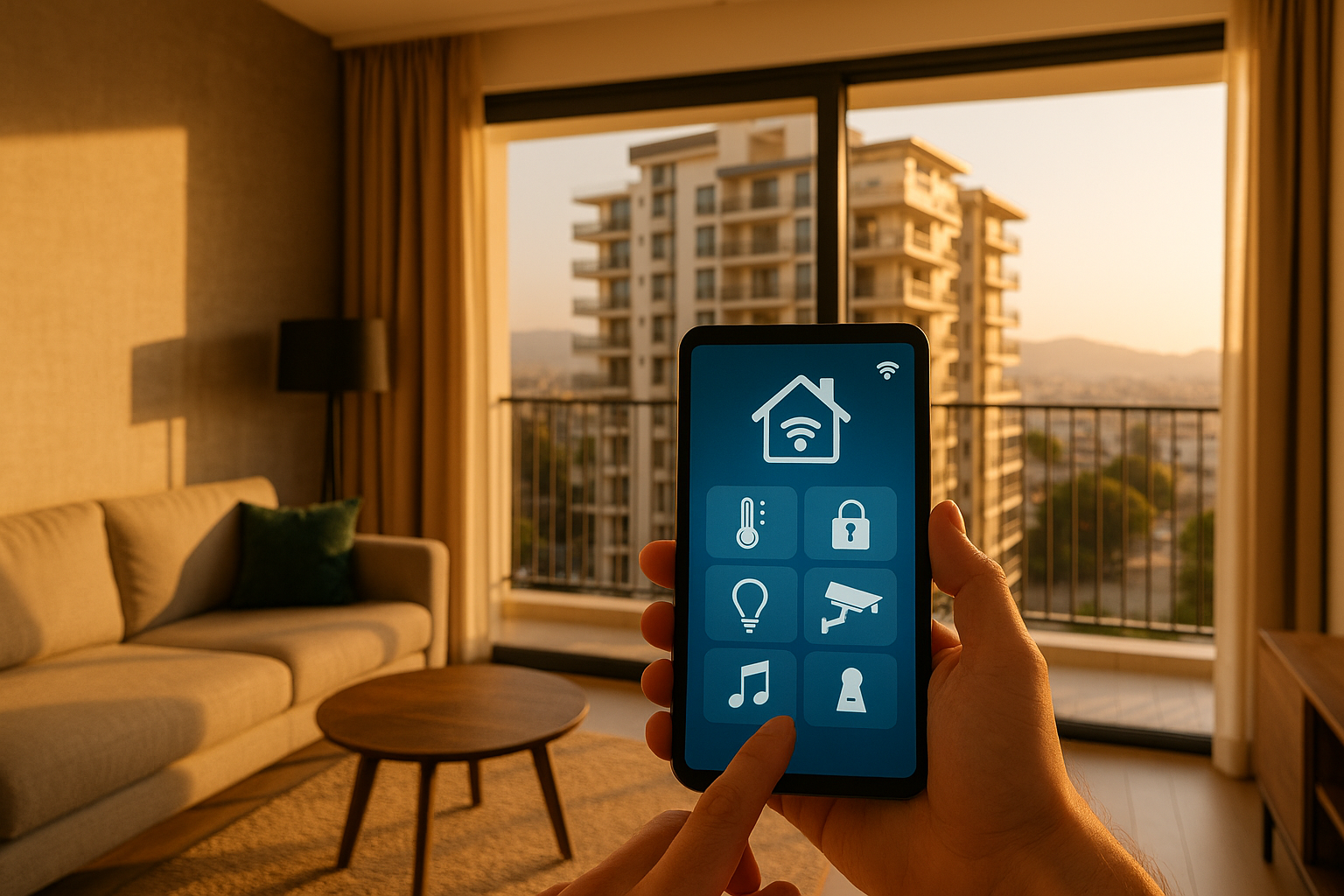
In India’s rapidly evolving real estate market, “smart-home” ready apartments are no longer a luxury they’re becoming the new norm. If you’re looking for a modern, future-ready flat in Jaipur or anywhere in India, knowing which smart home features matter can help you make the right choice. Whether you consider a 1BHK, 2BHK, 3BHK or even a studio apartment, smart design and home automation can make a big difference in daily comfort, safety, and long-term value.

In this blog, we explore what “home automation flats India” truly means from IoT devices to energy savings, security, convenience, and resale value. We also highlight why picking a project like Reliant Housing (near Mansarovar, Jaipur) can give you smart-home advantages along with solid real estate value.

Why Smart Homes Are Becoming Popular in India

The Rise of IoT in Homes India & Home Automation Flats India

  • Home automation and IoT (Internet of Things) are redefining how we live. Smart homes integrate devices lighting, security, appliances into one ecosystem that can be controlled via apps or voice.
  • Builders and developers across Indian cities are increasingly offering “smart-ready” flats as a differentiator.

Benefits: Comfort, Security, Energy Savings & Resale Value

  • Convenience and automation: From switching lights or ACs on/off to controlling appliances everything can become seamless with a tap or voice.
  • Enhanced security: Smart locks, video doorbells, CCTV cameras, motion sensors all connected via IoT allow round-the-clock monitoring even when you’re away.
  • Energy efficiency & cost savings: Automated lighting, climate control, and smart appliances help reduce electricity bills significantly. Smart homes in India report energy savings up to 20–30%.
  • Better resale value & demand: Flats with smart home features tend to attract modern buyers and command a premium. Smart features raise the appeal of “future-ready flats India.”

Must-Have Smart Home Features in Modern Apartments

If you’re looking for a smart home flat or a smart home 2BHK / 3BHK / studio, here are the features to look for whether you buy new or ready-to-move flats.

1. Smart Security & Access Control

  • Smart locks and keyless entry fingerprint, PIN or smartphone-based door locks for secure, hassle-free access.
  • Video doorbells, CCTV, motion sensors — real-time alerts and remote monitoring via mobile phones. Great for families and frequent travellers.
  • Integrated security hub — connects all security devices (locks, cameras, sensors) in one system, giving full control and notifications remotely.

2. Smart Lighting, Climate & Energy Management

  • Automated lighting systems — motion or occupancy-based lighting that turns on or off depending on presence; adjustable mood lighting for comfort & savings.
  • Smart climate control / HVAC systems — adjust temperature based on your preferences, weather, or schedule; can be controlled remotely.
  • Energy monitoring systems & smart meters — track electricity usage and optimize consumption to reduce bills.
  • Sustainability and green features — many modern smart homes aim to integrate energy-efficient devices, sometimes solar panels or energy-saving protocols.

3. Smart Appliances & Automated Home Devices

  • Smart appliances — refrigerators that track inventory and expiry, ovens that can be pre-heated remotely, smart washing machines, etc., which add convenience and time-saving.
  • Voice assistants & central control hubs — using devices like smart speakers (compatible with local Indian languages) to control lighting, climate, appliances, and entertainment.
  • Automation and scheduling — routines like “good morning” or “movie night” to automate multiple devices (lights, blinds, music) at once.

Smart-Ready Infrastructure from Builders

  • Pre-wired apartments for automation — rather than retrofitting, flats built with smart-home wiring and infrastructure make integration seamless.
  • Flexibility and retrofit options — for renters or those shifting homes frequently, there are solutions (smart switches, modular panels) that don’t require breaking walls or rewiring.

Why Choosing Apartments from Reliant Housing

If you are looking for a “future-ready flat near Jaipur / Mansarovar,” Reliant Housing’s approach can give you both modern smart-home-ready living and solid real estate value. Here’s why such a project is ideal:

  • Smart-home friendly design: When a developer plans flats considering automation from wiring to layout it becomes easier to incorporate smart locks, lights, sensors, and appliances.
  • Range of apartment types (1BHK, 2BHK, 3BHK, studio): Whether you are a small family or a bigger one, you can pick a home that fits your needs + add smart features accordingly.
  • Resale and future value: Smart apartments tend to attract buyers faster and offer better resale value due to demand for automation, comfort, security a strong advantage in growing markets like Jaipur.
  • Adaptable for modern lifestyle: Whether you are a working professional wanting remote access, a family needing security, or someone who values energy efficiency smart homes deliver.

What to Check When You Visit or Buy a Smart-Ready Flat

When evaluating a modern apartment for smart home readiness, consider the following:

  1. Whether the flat is pre-wired for automation — look for provisions for smart switches, sensors, wiring for CCTV, etc.
  2. Availability of smart security and access control systems — smart locks, video doorbells, CCTV are they integrated or can be added conveniently.
  3. Energy management systems — smart metering, efficient lighting/AC systems, possibility of integration with solar or energy-saving setups.
  4. Space and layout — ensure there is enough flexibility for smart appliances, modular kitchen, and smart-home devices (without clutter).
  5. Scalability and future upgrades — you may start with basic automation (lights, fans) and scale to full automation (HVAC, appliances) later as per budget.

Why Smart Home Flats Are the Future : Especially in Jaipur / Rajasthan

  • With rising awareness and demand, “smart homes in India” are transitioning from luxury to standard especially in urban and semi-urban areas.
  • Smart living offers long-term benefits comfort, security, lower energy bills which resonate with families, working professionals, and even retirees looking for convenience.
  • As more homebuyers look for “future-ready flats India,” incorporating smart features becomes a strong differentiator for builders and developers making such apartments easier to resell or rent.

Conclusion: Smart-Home Apartments A Wise Choice for Modern Buyers

If you are searching for a new flat whether 1BHK, 2BHK, 3BHK or a studio selecting a smart-ready apartment can bring ongoing comfort, security, energy savings, and long-term value. For families in Jaipur, especially near Mansarovar, a project by Reliant Housing that supports home automation can offer the best of both worlds: modern amenities + real estate value.

Smart home features are not just about gadgets they represent a smarter lifestyle, streamlined living, and a future-ready investment. If you are planning to buy or invest, consider prioritizing these features.

Name

Apartment Maintenance Checklist for Homeowners in Jaipur

Owning an apartment whether 1 BHK, 2 BHK, 3 BHK, 4 BHK or studio in a gated society is a great investment. But to preserve its value, comfort, and safety, regular maintenance and proper society management matter a lot. This blog offers a comprehensive apartment maintenance checklist especially relevant for homeowners in Jaipur, and shows how proper planning protects your investment and makes life easier.

Why Maintenance & Management Matters for Apartment Owners

  • Regular maintenance avoids unexpected breakdowns, structural issues, and costly repairs.
  • Well-managed facilities (lift, water supply, sanitation, security) ensure smooth day-to-day life.
  • Clean, functional common areas and timely maintenance enhance resale value and tenant appeal.
  • With increasing demand for apartments (1BHK, 4BHK, studio), a well-maintained property stands out against many important when you have many similar options in cities like Jaipur.

For a trusted developer like Reliant Housing, such systematic upkeep ensures that your flat remains a good investment over years.

Core Components of an Apartment Maintenance Checklist

Here are the main aspects every apartment owner / society should include in their maintenance checklist whether you live in a studio, a 1BHK, 2/3/4 BHK:

Routine Apartment-Level Maintenance

FrequencyWhat to check / doWhy it’s important
Weekly / MonthlyClean floors (vacuum / mop), wipe kitchen & bathroom surfaces, check for leaks or dampness, clear garbage/trash, inspect windows/doors/locksPrevent dirt, moisture, pests, and small damages turning into big issues. Basic hygiene and safety.
Monthly / QuarterlyCheck plumbing (tap, drainage), inspect electrical fittings, test exhaust fans / ventilation, check balcony/terrace for seepage, ensure insect/pest control, test smoke alarms / safety devicesPlumbing/electrical issues are common in Indian apartments; early detection prevents water damage, fire risk, health problems.
Yearly / Bi-annualDeep cleaning of kitchen appliances, repainting or touch-up of walls (if needed), check for cracks in walls/ceilings, examine roof / terrace waterproofing (for top-floor units), check windows, seals, glass, drainage, water supply linesPrevent structural issues, avoid leakages especially during monsoon, maintain aesthetics, preserve property value.

Common Areas & Society Maintenance

Apartments are not just individual flats gated societies share many common amenities. Proper maintenance of these ensures comfort and safety for all residents.

  • Lifts / Elevators: Includes AMC (annual maintenance contract), routine servicing, safety checks, lubrication, emergency support. Without AMC, unexpected repairs can cost substantial amounts.
  • Lighting, Staircases, Corridors, Common Electrical Systems: Periodic checks of wiring, switches, backup power (if any), staircase/external lights.
  • Water Supply, Pumps, Drainage, Sewage, Waste-Water Systems: Ensure water tanks, pumps, septic / drainage lines are cleaned and serviced avoid leakages, water stagnation, pests. Many building-level responsibilities fall under society maintenance fund.
  • Waste Management, Sanitation, Sewage Treatment (if any), Garbage Disposal Systems: Clean garbage areas, manage waste properly, ensure no foul odours or health hazards. In high-rise societies or large complexes, such infrastructure needs regular monitoring.
  • HVAC / Ventilation / Exhaust / Common Ducts (for large/high-rise apartments or societies that have central HVAC / ventilation): Regular servicing, duct cleaning or filter replacement, checking exhausts to ensure fresh air especially for societies in a hot city like Jaipur.
  • Security & Surveillance Infrastructure: CCTV, intercom, access-control systems periodic checking to ensure they work properly. Security staff management also requires scheduling and proper oversight.

Legal & Regulatory Aspects : Society Rules, Bye-Laws & Charges

For apartment owners in Jaipur / Rajasthan, understanding bye-laws and regulatory framework is essential.

Applicable Laws & Bye-Laws

  • The Model Rajasthan Building Bye Laws 2025 is applicable across urban areas including Jaipur. These regulations define permissible building standards, classification (flats, group housing, studio apartments), safety norms, structural requirements etc.
  • The Rajasthan Apartment Ownership Act, 2015 governs how apartment owners associations (AOAs) or societies are formed, their powers and duties, collection of maintenance fees, repair/maintenance of common areas, and management of common expenses.
  • Under the law, once association / society / RWA is formed, it becomes responsible for maintenance, repair, replacement, and collecting common expenses from all apartment owners.

How Maintenance Charges are Calculated

There are different models but two main ones:

  • Per-Square-Foot Method: Maintenance charge is calculated per square feet of the flat. E.g., if rate is ₹2–₹25 per sq. ft per month (depending on amenities, facilities, city), then maintenance is proportional to apartment size.
  • Equal Distribution / Uniform Fees: When flats are similar size, or society chooses, maintenance cost may be divided equally among all flats though fairness can be an issue if flats differ widely in size.

Which method suits a society depends on its structure, number of flats, variety (studio / 1BHK / 2BHK / 3BHK), amenities provided, shared facilities (lift, club, common areas) etc.

What the Maintenance Charges Cover

Maintenance charges collected by the society usually include:

  • Electricity and lighting for common areas (corridors, staircases, parking, external lights)
  • Salary of security, housekeeping, staff managing maintenance works
  • Water supply, pump maintenance, sewage, drainage, waste-management systems
  • Lift / elevator maintenance & AMC, if lift is provided.
  • Repair or structural work for common areas: external walls, compound walls, common plumbing/electrical, stairs, roads inside compound, parking area, external water tanks etc.
  • Reserve fund / sinking fund for long-term repairs, periodic major maintenance, structural repairs, replacement of major components.

Importance of Transparent Society Management

To avoid disputes, delays, unfair charges or neglect of important tasks, it’s essential that the management / society / RWA follows transparent practices:

  • Maintain proper records of money collected (maintenance fees, sinking fund, other charges) and expenses ideally audited regularly.
  • Ensure maintenance & repair of common areas are done in time delay often leads to bigger damage or safety issues.
  • Communicate with owners maintain minutes of meetings, send notices, inform about maintenance schedule, major repairs, contribution or additional charges.
  • For residents: maintain their own flat properly repair leakages, ensure proper disposal of waste, avoid dumping debris in common areas.

Apartment Maintenance Checklist

Apartment-Level Checklist

  • Weekly / Monthly
    • Sweep / mop floors, clean kitchen & bathroom.
    • Check taps, drainage, plumbing for leaks.
    • Clean balcony / terrace (if any), ensure no water stagnation.
    • Check electrical switches, fans, lights, exhaust fans.
    • Dispose garbage properly; keep waste bins covered.
  • Quarterly / Every 3–6 months
    • Deep-clean kitchen appliances (stove, exhaust, chimney), cupboards, cabinets.
    • Check windows & doors lock working, proper sealing, no water seepage.
    • Test any safety devices (smoke alarm, fire extinguisher, if any).
    • Check walls / ceilings for cracks, dampness, signs of leak or seepage.
  • Yearly / As Needed
    • Paint or touch-up walls / ceilings if required.
    • If top-floor: check terrace / roof waterproofing, drains, parapet walls, railing.
    • Thorough plumbing and electric inspection (hire certified plumber / electrician).
    • Pest control / termite treatment (especially in older buildings).

Society / Common Areas Checklist

  • Lift / Elevator – service, AMC, safety checks (doors, wiring, emergency mechanisms) every 3–6 months minimum.
  • Staircase & corridor lights, backup lighting, parking area lighting maintain / replace bulbs, check wiring.
  • Water tanks, pumps, drainage, sewage clean/flush periodically; check for leakages; maintain water quality.
  • Waste disposal / garbage chute / common dustbins ensure timely clearing, avoid garbage accumulation.
  • External walls, compound walls, roads inside the society / complex, boundary walls periodic check for cracks, painting, structural integrity.
  • HVAC / ventilation (if applicable), common duct cleanliness, exhaust checks.
  • Security and surveillance systems CCTV maintenance, access-control, intercom (if any), and periodic testing.
  • Budget review & fund allocation regular review of maintenance fund, sinking fund; transparent accounting & expenditure tracking.
  • Resident communication schedule maintenance works, inform residents ahead of time, record complaints, and address them.

Why Residents of Reliant Housing Should Care : Benefits for Homeowners & Investors

If you’re owning or planning to buy in a project by Reliant Housing, adhering to a thorough maintenance plan offers several advantages:

  • Better resale value — A well-maintained flat (whether 1BHK, 2BHK, 3BHK, 4BHK or studio) with proper upkeep and functional common amenities will attract buyers more easily when you choose to resale.
  • Comfortable living experience — Regular maintenance ensures lifts, water supply, sanitation, security all work smoothly — essential especially in summers or monsoons in Jaipur.
  • Lower long-term repair costs — Preventive maintenance avoids major structural or plumbing/electrical failures, saving big expenses later.
  • Community living benefits — Clean common areas, functioning amenities, transparent society management improves living standards and community trust.
  • Legal compliance and transparency — Following bye-laws, fair maintenance charges (per sq ft or as per society agreement) keeps everything transparent and fair for all residents.

How to Implement & Manage Maintenance : Practical Tips for Jaipur Societies

Create a Maintenance Plan & Schedule

  • Use a maintenance calendar define tasks weekly, monthly, quarterly, yearly.
  • Form a maintenance / facility-management committee includes few residents + support staff / vendor. Assign clear responsibilities.
  • Maintain a logbook (physical or digital) record complaints, repairs, maintenance done, date, expense, vendor name. This becomes your “property maintenance log / plan template”.

Budgeting & Maintenance Charges : Fair & Transparent Approach

  • Decide maintenance charge method (per sq ft or equal distribution) early for fairness, many societies prefer per-square-foot model.
  • Break down monthly maintenance charges clearly common area electricity, lift AMC, water/pump maintenance, staff salary, sinking fund, etc. Transparency builds trust.
  • Collect funds (maintenance + sinking fund) regularly avoid accumulating dues. Also plan for periodic major maintenance (paint work, structural repairs).
  • For societies with many flats: consider outsourcing to a professional property-management / maintenance agency or using a property-management app/software for efficient tracking and transparency.

Role of Residents & Owners

  • Keep your flat clean and do timely minor repairs (plumbing, sealing, paint). Neglecting flat-level maintenance affects whole building (leaks, seepage, pests).
  • Report issues promptly to society leakage, water leakage, faulty wiring, damaged common areas.
  • Follow society bye-laws and rules avoid dumping waste in common areas, follow noise/waste norms, keep communal areas neat, respect residents and shared facilities.
  • Ensure transparency ask for maintenance receipts, expense breakdowns. If society delays or mismanages funds, residents can call for a general body meeting. Legal backing exists under Apartment-owners laws.

Common Problems & Mistakes: What to Avoid

  • Ignoring small issues: leaks, cracks, seepage these can worsen over time and lead to structural damage or costly repairs.
  • Relying solely on ad-hoc maintenance Without schedule, things will be missed. No regular upkeep equals higher long-term cost.
  • Poor or opaque accounting of maintenance charges / funds leads to mistrust, disputes, residents defaulting on payments.
  • Overlooking society-level maintenance (lift, water pumps, drainage, waste management, common lighting) puts burden on individual flat owners later.
  • Neglecting legal and regulatory compliance not following bye-laws, not forming proper society / homeowners’ association, could cause legal complications.

Conclusion

Maintaining an apartment in Jaipur whether it’s a compact 1 BHK, a roomy 3,4 BHK, or a studio is not just about cleaning once in a while. It’s about planning, scheduling, transparency, and community management. A detailed apartment maintenance checklist, combined with effective society management and a sense of responsibility from all residents, can keep your home safe, functional, and high in resale value for years.

For homeowners and investors in Reliant Housing projects, following such a maintenance plan will ensure you get the full value of your investment and enjoy comfortable, trouble-free living.

Name

Luxury vs Budget Flats India: What’s the Right Choice for You?

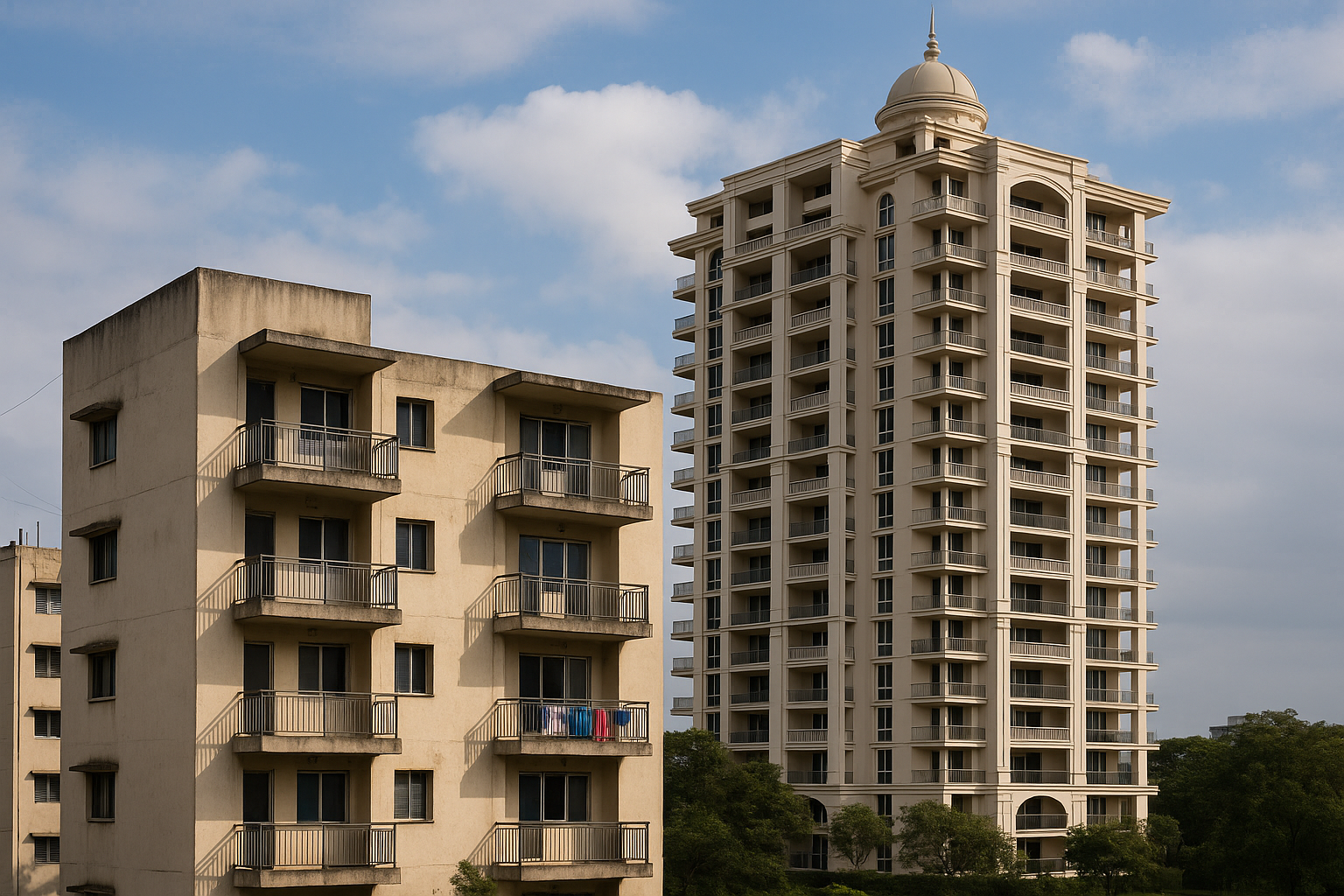
Deciding between luxury and budget flats in India is one of the biggest choices a home-buyer makes. Whether you go for a high-end premium apartment or an affordable budget-friendly home depends on your needs, finances, and long-term goals. In this post, we compare luxury vs budget flats India. what you get, what you sacrifice, and how to choose wisely. We also highlight why a reputed developer like Reliant Housing could be your partner in this decision.

What Defines a “Luxury / Premium Apartment” vs “Affordable / Budget Home”

Typical Price Ranges & Market Trends in India

  • “Luxury” or premium homes in major cities most often start from around ₹1.5 crore and above, while affordable or budget homes range from ₹20 – 60 lakh (or up to ~₹50 lakh to ₹1 crore / mid-segment in many cases).
  • Over the past few years, demand for premium homes has surged. Sales of luxury-segment apartments have increased significantly, while the share of affordable homes in many metros has declined.
  • According to recent data, luxury homes have recorded higher price appreciation compared to budget homes: the price per square foot for luxury homes rose substantially between 2022 and 2025.

Difference Between Luxury vs Budget Flats (India)

Feature / FactorLuxury Flats / Premium ApartmentsBudget / Affordable FlatsAffordable Luxury (Mid-Segment)
Price RangeHigh (₹1.5 Cr to 10+ Cr depending on city)Economical (₹20–60 Lakhs)Middle (₹60 Lakhs – ₹1.5 Cr)
Target BuyerHigh-income buyers, HNIs, NRIsFirst-time buyers, middle classProfessionals, growing families
LocationPrime locations, city centresDeveloping suburbsWell-connected upcoming areas
Unit SizesSpacious 3 BHK, 4 BHK, penthousesCompact 1 BHK, 2 BHK2 BHK, 3 BHK practical size
Carpet AreaHigher carpet area, open layoutsMinimum usable areaBalanced usable area
Materials & FinishesTop quality, branded fixturesBasic but functionalGood quality but cost-optimised
AmenitiesSwimming pool, gym, club house, conciergeLimited/common amenitiesModern but limited (gym/clubhouse)
Construction QualityPremium qualityStandardGood quality
Parking FacilityMultiple parking slotsSingle open/limited parkingDedicated parking
SecurityAdvanced security + CCTV + guardsStandard securityGood security + CCTV
Maintenance CostHigher (because of amenities)Very lowModerate
Resale ValueHigh resale + Less depreciationDecent resaleGood resale potential
Rental IncomeHigh rent returnsModerate rentStable rent
Smart Home FeaturesYes (automation)Rarely availableSelectively available
Energy EfficiencyGreen certifications possibleBasicBetter than budget
Possession TimeTimely if big developerSometimes delaysOn-time mostly
Status / PrestigeVery highPracticalBalanced
Who Should BuyLifestyle seekers & investorsBudget buyersComfort + value buyers

What “Luxury / Premium” Typically Offers

Luxury or premium apartments generally come with:

  • Spacious layouts larger built-up areas, generous living/dining rooms, multiple bedrooms (3 BHK, 4 BHK or more).
  • High-end finishes: premium quality interiors, branded fixtures, better flooring/materials, quality construction.
  • Lifestyle and community amenities: clubhouses, gyms, swimming pools, landscaped gardens, security, well-maintained common areas, sometimes smart-home features or eco/green-certified buildings.
  • Prime or well-connected locations near business districts, good transport, amenities such as schools, hospitals, shopping areas.

What Budget / Affordable / Mid-Segment Homes Provide

Budget and affordable homes tend to focus on practicality over luxury. Their typical traits:

  • Smaller size compact 1 BHK, 2 BHK, maybe smaller 3 BHK depending on the city and project.
  • Basic but functional amenities often limited or modest amenities, maybe fewer lifestyle features, simpler finishes and fittings.
  • Lower upfront investment and EMIs making them accessible for first-time buyers, young professionals, or families on a budget.
  • Often located in developing suburbs or emerging areas rather than prime city centers which may mean trade-offs on connectivity or convenience but better affordability.

Why Buyers and Investors Choose Luxury vs Budget : Pros & Cons

Pros of Luxury / Premium Apartments

  • Better long-term appreciation and returns: Luxury / premium properties have historically seen stronger price growth compared to budget homes.
  • Superior lifestyle and comfort: Spacious homes, high-quality construction, modern amenities, better design all add convenience and prestige.
  • Status, social value and safety: For many buyers, owning a premium apartment is not just about living it’s a statement. Gated security, good maintenance, and community living also offer peace of mind.
  • Strong resale and higher premium buyer base: Because of location, quality, and amenities, luxury apartments often remain attractive in the resale market or fetch better rent/ROI.

But Trade-offs / Cons: High upfront cost, more expensive maintenance, sometimes overpricing due to amenities “loading factor,” and smaller usable carpet area relative to super built-up area.

Pros of Budget / Affordable / Mid-Segment Homes

  • Lower entry cost and easier financing: Lower price makes these homes accessible to first-time buyers, salaried professionals, or families on modest budgets.
  • Better liquidity, easier resale/rent potential: Because of affordability, wider pool of potential buyers/renters especially among middle-income buyers making resale or renting easier.
  • Suitable for practical needs: Smaller family, simpler lifestyle, or if you prioritize cost over luxe amenities this segment delivers functional housing without overspending.
  • Potential benefit from government incentives: Affordable housing sometimes qualifies for subsidy schemes, tax benefits, lower cost home-loans (depending on region and scheme).

But Trade-offs / Cons: Limited amenities, perhaps smaller living space, sometimes less optimal location or slower appreciation compared to premium segment.

How to Decide What’s Right for You : Key Considerations

When choosing between luxury and budget flats in India, consider:

Your Budget & Loan/EMI capacity

If you have sufficient capital or stable high income premium/luxury might make sense. If not, a budget or mid-segment flat keeps financial stress in check and offers easier access.

Long-Term Goals: Lifestyle vs Practical Living

  • Want status, spacious living, modern amenities, long-term investment luxury.
  • Looking for simplicity, budget-friendliness, manageable upkeep budget/mid-segment.

Location, Connectivity & Future Growth Potential

A flat in an emerging area with good infrastructure growth potential may offer better value even if it’s budget-friendly. For luxury flats, a central or prime location adds value through convenience, demand, and better resale.

Usage Pattern : Self-use vs Rental/Resale

If you plan to live long-term focus on comfort, amenities, space. If you buy for investment or rental factor in demand in that area, resale potential, liquidity.

Maintenance & Hidden Costs, Loading Factor & Real Carpet Area

Luxury homes may have higher maintenance, society fees, amenities charges. Sometimes super built-up area is much more than actual usable carpet area so check “loading factor” carefully.

Where Does a Balanced Option : Affordable Luxury / Mid-Segment – Fit In

Not everyone needs ultra-luxury or wants to compromise fully on basics. There is a growing demand for affordable luxury / mid-segment homes providing good quality, decent amenities, reasonable price.

These are suitable for:

  • Middle-income families who want quality living without overpaying
  • Young professionals seeking manageable EMIs but decent comfort
  • Investors wanting balance: reasonable price, decent amenities, and good appreciation potential

Why Buyers Should Consider Projects by Reliant Housing

At Reliant Housing, we understand that every home-buyer is different. Whether you are looking for a 1 BHK studio, 2 BHK compact, 3 BHK comfortable family home or larger apartments we offer a range of options keeping in mind value, quality, affordability, and future growth potential.

Variety of Configurations: Studio / 1, 2, 3, 4 BHK or beyond

Our projects cater to different needs. Whether first-time buyers, small families or large ones there’s flexibility in layout and size.

Transparent Pricing and Realistic Value

With clear cost breakdown and honest super built-up vs carpet analysis we aim to keep the “loading factor” reasonable.

Balanced Amenities & Location Advantage

We plan our developments in areas with promising infrastructure or connectivity, ensuring good long-term resale or rental value a balanced approach between luxury and affordability.

Trust, Quality and Buyer-Centric Philosophy

At Reliant Housing, our commitment is to build homes not just sell flats. We believe in delivering value for money, and helping home-buyers make a wise investment rather than just a purchase.

Conclusion : Luxury vs Budget: There’s No One-Size-Fits-All

The choice between luxury and budget flats depends on what you value most: luxury, space, amenities, long-term appreciation, and lifestyle, or affordability, practicality, lower financial burden, ease of maintenance. For many, a balanced, mid-segment home like those offered by Reliant Housing offers the best of both worlds.

If you’re looking for a home that fits your budget, lifestyle, and future plans explore our projects at ReliantHousing.in. We believe your home should be more than just four walls it should be a space of comfort, security, value, and lasting memories.

Name

Why Location is the Most Important Factor in Real Estate Investment

Ever wondered why two almost identical flats can differ so much in price? The answer is LOCATION. In this blog, you’ll discover why location is the most important factor in real estate affecting lifestyle, connectivity, amenities, resale value, rental demand and long-term growth. And most importantly, how Reliant Housing selects prime, future-ready areas in Jaipur so you don’t just buy a home, you buy a location that guarantees convenience, appreciation and peace of mind.

Why Location Is Critical When Buying Property

When you buy a home or investment property, you are not just buying the building you are buying its surroundings. The location determines how you live your life, how comfortable your daily routine will be, and how your property’s value behaves over time. In real estate, location is often the single most important factor.

Here’s why location matters so much:

  • Connectivity & Accessibility: A home near main roads, good transport networks, or city hubs saves commute time and makes daily travel easier.
  • Amenities and Social Infrastructure: Good schools, hospitals, shopping centers, parks all these make a neighbourhood livable and attractive.
  • Safety and Neighborhood Quality: Areas with lower crime rates, better maintenance, and clean surroundings draw more families and long-term residents.
  • Future Growth & Development Potential: Locations with upcoming infrastructure projects, growth-corridors or planned development tend to appreciate more over time.
  • Resale and Rental Value: Because of high demand, properties in good locations maintain or increase value offering better resale price or rental yield.

In short: “Where you buy” often matters more than “what you buy.”

What Makes a Good Location in India (and Jaipur)

Before diving into specific real estate projects, it’s important to know what qualities define a “good location.” These are universal, but especially relevant in fast-growing Indian cities like Jaipur.

Connectivity & Transport Access

  • Close to major roads, highways, or ring roads.
  • Easy access to public transport (buses, rapid transit if available).
  • Short commute to workplaces, business hubs, city center which matters a lot if you work in the city.

Proximity to Amenities and Services

  • Nearby reputed schools, colleges essential for families.
  • Hospitals, healthcare facilities, pharmacies and daily-need stores.
  • Shopping centres, supermarkets, recreation: malls, parks, gyms, entertainment options.

Neighborhood Quality, Safety & Environment

  • Low crime rate, good civic maintenance, proper infrastructure (roads, drainage, water supply, electricity).
  • Clean environment, green spaces, peaceful ambience important for healthy, comfortable living.

Economic Opportunity & Demand : For Investment & Resale

  • Proximity to employment hubs, commercial centres, business zones increases demand for housing.
  • Areas undergoing development (new infrastructure, better roads, future planning): likely to appreciate over time.
  • Balanced supply-demand: limited supply in good locations + high demand = stable or rising property prices over long-term.

Long-Term Stability & Future-Proofing

  • Well-planned neighbourhoods, compliance with zoning/regulations, transparent legal status.
  • Outlook for long-term growth rather than short-term speculative gains important especially for families or long-term investors.

Why Location Doesn’t Only Matter : It Defines Real Estate Value

Many seasoned investors and property experts believe that location drives almost every other attribute of real estate: price, resale value, demand, rental yield, lifestyle convenience.

  • A well-built, luxurious flat in a remote or poorly connected area may not offer good resale value or demand.
  • On contrary, a modest-sized home (say 1 BHK or 2 BHK) in a prime locality with good connectivity, amenities and infrastructure may outperform in resale and rental than a larger home in a remote area.
  • For investors looking for long-term returns or rental income location becomes the guarantee of stability, demand and future growth.

Hence, when you choose property never focus only on carpet area, fixtures, finishing always give topmost priority to location.

Why Reliant Housing Projects Stand Out : Location Advantage

Here’s how Reliant Housing uses the power of location to deliver value to homebuyers and investors in Jaipur:

  • Reliant Housing selects project sites in well-connected and upcoming neighbourhoods making sure connectivity, easy commuting and access to city centres are covered.
  • Their developments are close to essential amenities: schools, healthcare, retail markets offering a lifestyle that suits families.
  • By building in areas with future growth potential and infrastructure development, Reliant Housing ensures that buyers get stable appreciation and good resale value over time.
  • Whether you choose a studio apartment, 1 BHK, 2 BHK, 3 BHK or 4 BHK the combination of good layout + prime location helps you get a property that’s livable, financially sound and future-ready.

How to Choose the Right Type of Home (1,2,3,4 BHK / Studio / Apartment / Square Feet) Based on Need

When you’re evaluating homes for yourself or for investment, consider these guidelines tailored to match with good location:

  • Studio / 1 BHK: Ideal for young professionals, singles or couples. If the location has strong connectivity and proximity to workplace, even a small flat can offer high convenience.
  • 2 BHK: Great for small families or couples planning long-term; gives more space and flexibility. In a good location, 2 BHK balances affordability + resale value + comfort.
  • 3 BHK / 4 BHK: For bigger families or those wanting more space, privacy, and long-term home. In a prime locality, these larger units offer strong long-term investment value.
  • Apartment vs Villa vs Individual Home: Apartments in gated communities with good location provide security, amenities and community living. Standalone homes or villas can give more privacy but only if location and infrastructure support daily living.
  • Area (square feet): Always check carpet / built-up area vs price per sq ft AND compare with similar properties in same locality. In a prime location, even smaller square footage may fetch higher resale value.

Why Location Matters in Real Estate

Location : The Key to Real Estate Investment Success

  • When you invest in a property (for resale or rental), your returns depend heavily on demand and demand is driven by location.
  • Properties in accessible, amenity-rich and well-connected areas maintain higher occupancy, better rental yields, and stronger resale value.
  • Choosing a growing locality, or area with upcoming infrastructure, increases chances of appreciation over time making it a wise long-term investment. v

For Cities and Their Real Estate Market (Including Jaipur)

  • In India’s growing cities and tier-2 / tier-3 towns, demand for well-located residential units is rising as people migrate for work, education and better lifestyle.
  • Residential projects in prime locations help shape sustainable urban growth providing livable neighbourhoods, infrastructure demand and organized expansion rather than uncontrolled sprawl.
  • For city’s real estate sector as a whole, location-driven developments improve overall property value stability and attract long-term investments rather than speculative buying.

Key Takeaways : What You Should Do When Buying a Home or Investing in Real Estate

  1. Always prioritise location over size or fancy features. Location influences everything else value, convenience, lifestyle, resale.
  2. Check connectivity, transport, commute time. How easy will daily commuting be? Is there access to public transport or good roads?
  3. Look at amenities nearby. Schools, hospitals, markets, recreation proximity to these ensures better living standards.
  4. Consider future potential: upcoming infrastructure, development plans, expected growth in area. This gives long-term value appreciation.
  5. Match the type of home with your needs (1 BHK vs 2/3/4 BHK, apartment vs villa). Choose based on your family size, lifestyle, and investment goals but always in a good location.
  6. Think long-term: even if you buy for self-use, look at resale and rental potential. A good location secures your investment for future.
  7. With a trusted developer (like Reliant Housing), you get both good construction and great location an optimal combination.

Conclusion

When it comes to real estate especially in a city like Jaipur location is not just one factor among many. It is the foundation on which everything else stands. A well-located property ensures you enjoy convenience, comfort, lifestyle quality now and strong value, appreciation, and demand in the future.

At Reliant Housing, we understand this deeply. Our projects are planned and executed with prime locations in mind, balancing connectivity, amenities, infrastructure, and growth potential. So whether you’re looking for a cozy studio, a 1 BHK for yourself, a 2 BHK for a young family, or a spacious 3,4 BHK apartment, make sure location is the first checkbox. Because with location, you are investing not just in a home but in your future.

Name

Your dream home
is just a call away

For Booking Call +91 9057833000

whatsapp