
10 Real Estate Scam Red Flags & How to Protect Yourself

The real estate market in India is growing rapidly, attracting buyers, investors, and first-time homeowners. Unfortunately, this growth has also led to an increase in scams and fraudulent schemes. Falling victim to a property scam can result in serious financial loss, legal complications, and emotional stress. That is why real estate scam prevention in India is more important than ever.

Whether you are buying your first home or investing in property, understanding the warning signs can save you from major trouble. In this blog, we discuss 10 common red flags and practical steps to protect yourself. Trusted developers like Reliant Housing emphasize transparency and legal compliance, helping buyers make safe property decisions.

Understanding Real Estate Scams

A real estate scam occurs when someone deceives a buyer, seller, or investor to illegally take their money. Common examples include fake property advertisements, forged documents, and misleading investment promises.

People most at risk include:

  • First-time homebuyers unfamiliar with legal procedures
  • Investors looking for quick, high returns
  • Renters responding to online property listings

These scams can cause financial loss, legal disputes, and significant stress. Careful verification and awareness are the best ways to stay safe.

Top 10 Red Flags of Real Estate Scams

1. The Price Is Too Low

If a property is significantly cheaper than similar properties in the area, be cautious. Always research local market prices and verify the seller or builder’s credibility.

2. Pressure to Make a Quick Decision

Scammers often say, “This offer is only valid today.” Do not rush. Take time to ask questions and verify all details before making any payment.

3. Missing or Suspicious Documents

If ownership proof, identity documents, or property papers are incomplete or unclear, treat it as a serious warning sign. Always confirm that documents are genuine and properly registered.

4. Demand for Cash Payments

Avoid paying large amounts in cash without official receipts. Use secure payment methods such as bank transfers or checks, and keep proper documentation.

5. Unregistered Agents or Builders

Verify whether the agent or builder is officially registered. Fraudulent agents may appear professional but are not listed on government or regulatory websites.

6. Unrealistic Profit Promises

Be cautious if someone guarantees extremely high rental income or quick returns. Compare their claims with actual market trends before believing such promises.

7. No Property Visit Allowed

If you are not allowed to physically visit the property and are shown only photos, it could be a scam. Always conduct a site visit or take a trusted virtual tour from a verified source.

8. Avoiding Clear Answers

If the seller avoids answering direct questions or provides vague explanations, consider it a red flag. Genuine sellers provide clear details and proper agreements.

9. Too Many Middlemen Involved

When multiple unknown people are involved in the transaction, the risk increases. It is safer to deal with one verified and trustworthy professional.

10. Poor Online Reviews or Fraud Warnings

Before finalizing a deal, search for online reviews and complaints about the builder or agent. Consistent negative feedback or fraud allegations should not be ignored.

How to Protect Yourself from Property Fraud

1. Verify Property Ownership Carefully

Before investing, thoroughly verify:

  • The property title in official land records
  • No pending legal disputes or financial claims
  • Valid identity and ownership documents

Taking time to verify these details can prevent major financial losses.

2. Work Only with Licensed Professionals

Always deal with registered agents, brokers, or builders. Trusted companies like Reliant Housing follow legal guidelines and ensure transparent transactions.

If someone cannot provide proof of registration, it is safer not to proceed.

3. Conduct Proper Due Diligence

Before purchasing:

  • Research the locality, infrastructure, and future development plans
  • Check the builder’s track record and past projects
  • Compare the property price with similar properties nearby

Careful research reduces the risk of being misled.

4. Use Safe Payment Methods

Never make large payments in cash. Always:

  • Use bank transfers or official payment channels
  • Keep proper receipts for every transaction
  • Verify ownership before transferring money

Secure payment methods provide proof in case of disputes.

5. Consult a Legal Expert

If you are unsure about any document or clause, consult a real estate lawyer. A lawyer can:

  • Review agreements and identify inconsistencies
  • Detect potential fraud or legal risks
  • Guide you on the safest way to complete the purchase

Legal advice is one of the strongest protections against fraud.

What To Do If You Suspect Fraud

If you believe a property deal may be fraudulent, act immediately:

  1. Stop making further payments.
  2. Collect and save all evidence, including emails, messages, and documents.
  3. Verify property ownership through official government records.
  4. Report the matter to the appropriate authorities.
  5. Seek legal assistance from a qualified real estate lawyer.
  6. Warn others by sharing your experience responsibly.

Acting quickly can help protect your money and prevent others from becoming victims.

Conclusion

Real estate scams are increasing, but awareness and careful verification can protect you. Watch for the 10 red flags discussed above and always complete proper legal checks before investing. Trusted developers like Reliant Housing prioritize transparency and compliance, making them a safer choice for property buyers.

By staying alert, informed, and cautious, you can invest confidently and avoid property fraud.

Rental Yield Explained: Maximize Your Property Income

Want to know how investors earn regular income from property while building long term wealth? It all starts with rental yield. A strong rental yield ensures steady monthly cash flow and supports future capital appreciation. Trusted real estate advisors like Reliant Housing guide investors toward locations with stable rental income and strong growth potential.

In this blog, you will learn what rental yield is, how to calculate it correctly, and the best strategies to maximize income from your property investment. Understanding these insights helps you make smarter buying, pricing, and long-term real estate decisions.

What Is Rental Yield?

Rental yield is the percentage of annual rent a property earns compared to its total purchase price or current market value. It helps investors understand how much return a rental property can generate and whether it can provide steady monthly income.

A higher rental yield usually means better rental earnings, while a lower yield may depend more on long-term property appreciation. This metric is commonly used to compare different properties and make informed investment decisions.

Why Is Rental Yield Important for Property Investors?

Rental yield helps investors evaluate the true earning potential of a property. Here’s why it matters:

  • Checks profitability: Shows how much rent you earn compared to the property price.
  • Helps choose the right property: Makes it easier to compare different investment options.
  • Provides steady income: A good yield ensures consistent monthly cash flow.
  • Balances risk and growth: Helps decide between rental income and future appreciation focus.
  • Supports financial planning: Assists in budgeting for maintenance, taxes, and pricing strategy.

In short, rental yield is a simple but powerful tool for making smart and profitable real estate investments.

Types of Rental Yield

1. Gross Rental Yield

  • Calculated without subtracting expenses
  • Useful for quick property comparison

2. Net Rental Yield

  • Includes maintenance, taxes, insurance, and vacancy costs
  • Shows the actual profit percentage

Difference Between Gross and Net Yield

Gross yield gives a basic income estimate, while net yield shows real earnings after expenses and is more accurate for decision making.

How to Calculate Rental Yield

Gross Rental Yield Formula

Formula:
(Annual Rent ÷ Property Price) × 100

Example:
Property price: ₹50,00,000
Monthly rent: ₹15,000
Yearly rent: ₹1,80,000

Gross Rental Yield = (1,80,000 ÷ 50,00,000) × 100 = 3.6%

Net Rental Yield Formula

Formula:
(Annual Rent − Annual Costs ÷ Property Price) × 100

Common annual costs include:

  • Maintenance charges
  • Property tax
  • Repair expenses
  • Vacancy loss

Net yield is usually lower but provides a more realistic picture of actual profit.

Ideal Rental Yield Percentage in India

Typical rental yield in real estate in India varies by city type:

City TypeAverage Rental Yield
Emerging cities (Jaipur, Indore, Lucknow)4% – 6%
Metro cities (Delhi, Mumbai)2% – 3%
IT hubs (Bangalore, Pune, Hyderabad)3% – 5%

Emerging cities often offer better rental returns due to lower purchase prices and increasing housing demand.

Why Rental Yield Depends on Location and Demand

Several factors affect rental income potential:

  • Location and connectivity: Properties near metro stations, offices, and main roads attract higher rent.
  • Rental demand: Areas with students and working professionals see lower vacancy rates.
  • Property type: Apartments usually rent faster than villas.
  • Amenities: Security, lifts, parking, and clubhouse facilities increase rental value.
  • Future development: Infrastructure projects can boost demand and rent levels.

Property experts at Reliant Housing often recommend growing areas where both property value and rental income can rise over time.

Best Strategies to Maximize Rental Income

Choose High-Demand Locations

Focus on IT corridors, educational hubs, and commercial zones to reduce vacancy.

Improve Property Value

Simple upgrades like fresh paint, modular kitchens, and better lighting can increase rent by 10–20%.

Set the Right Rental Price

Research nearby listings and avoid overpricing to maintain steady income.

Reduce Vacancy Period

Market online, maintain documentation, and keep the property well-maintained.

Offer Furnished or Semi-Furnished Options

Furnished homes attract professionals and command higher rent.

Use Professional Property Management

Experts handle tenant search, agreements, and maintenance, improving long term rental performance.

Rental Yield vs ROI: What’s the Difference?

Rental Yield

  • Measures yearly rental income compared to property price
  • Focuses on regular cash flow
  • Calculated annually

ROI (Return on Investment)

  • Measures total profit including rent, appreciation, and expenses
  • Shows overall long-term profitability
  • Calculated over the entire investment period

How Rental Yield Differs from Other Investment Metrics

Investors use multiple financial metrics to evaluate property performance:

  • Cap Rate: Based on net operating income and market value; focuses on property performance only.
  • ROI: Includes rental income, appreciation, and all expenses; broader than rental yield.
  • Cash-on-Cash Return: Measures return based on actual cash invested.
  • IRR (Internal Rate of Return): Calculates annualized return over the holding period, considering time value of money.

Rental yield provides a quick snapshot of rental income, but comparing it with other metrics gives a more complete view of profitability and risk.

Why Rental Property Is a Smart Investment in 2026

Real estate trends indicate:

  • Rising urban migration
  • Growing rental housing demand
  • Increasing interest in passive income

Emerging cities are becoming rental hotspots due to affordability and infrastructure growth.

First-time investors should focus on:

  • Budget-friendly locations
  • Ready-to-move properties
  • Areas near employment hubs

Professional guidance from Reliant Housing can help identify projects that deliver stable rental income and long-term appreciation.

Conclusion

A well-chosen rental property can create stable income and strong long-term profit potential. In this blog, you learned how to calculate rental yield, identify ideal locations, set the right pricing, and maximize returns.

With professional guidance from Reliant Housing, finding the right investment becomes easier and more secure. Take the next step today and build a stronger financial future through smart real estate investment.

Why Sustainable & Eco Friendly Homes Are Real Estate’s Future Now

What if the home you invest in today looks perfect now but becomes more expensive to live in every year? High utility bills, poor energy efficiency, and uncomfortable spaces can turn your biggest investment into a long-term liability.

This blog will help you understand why sustainable housing is the smarter choice today. You’ll learn how eco-friendly homes reduce long-term costs and improve living quality. It also explains the key green building trends shaping modern real estate. Most importantly, it shows how the right guidance makes all the difference and how Reliant Housing helps you choose smarter, sustainable homes built for long-term value.

What Is Sustainable Living in Real Estate?

Sustainable living in real estate focuses on creating homes that balance comfort, efficiency, and environmental responsibility. It aims to reduce resource consumption while improving everyday living standards.

These homes are designed to lower long-term costs, support healthier lifestyles, and maintain strong property value in the future.

Why Eco Friendly Homes Are in Demand

Eco friendly homes are becoming popular because people want houses that are affordable to maintain and better for their health and the environment. Rising electricity bills, water shortages, and climate concerns are encouraging buyers to choose smarter housing options.

These homes offer long-term savings, comfort, and peace of mind making them a preferred choice for modern homebuyers.

Main Reasons Why Eco-Friendly Homes Are in Demand:

  • Efficient use of energy to reduce electricity bills
  • Durable and eco-friendly construction materials
  • Natural lighting and ventilation for better indoor health
  • Water-saving solutions like rainwater harvesting
  • Smart home technologies for better energy management
  • Reduced waste and lower environmental impact
  • Long-term savings on maintenance and utilities
  • Homes aligned with modern green building trends

Top Eco-Friendly Features in Modern Homes

Modern homes are designed to be smarter, more efficient, and environmentally responsible. Eco-friendly features help reduce energy and water usage, lower living costs, and create healthier spaces for families. They also make homes future-ready.

  • Solar panels: Provide clean energy and reduce dependence on traditional electricity
  • Energy-efficient lighting and appliances: Use less power and lower monthly bills
  • Natural lighting and ventilation: Reduce the need for artificial lighting and air conditioning
  • Rainwater harvesting systems: Collect rainwater for reuse and help manage water shortages
  • Water-efficient fixtures: Save water without affecting daily comfort
  • Eco-friendly building materials: Reduce environmental impact and improve durability
  • Smart home technology: Allows better control of energy and resource usage
  • Waste management systems: Support recycling and reduce overall waste generation

Key Benefits of Sustainable Homes

Sustainable homes are designed to make daily life easier, healthier, and more affordable. They focus on saving energy and water while providing better comfort.

Lower Electricity and Water Bills

Sustainable homes use smart design and efficient systems to reduce monthly utility expenses.

Comfortable Living Environment

Proper sunlight, fresh air, and ventilation keep the home pleasant throughout the day.

Better Health and Well-Being

Safe building materials and improved indoor air quality support healthier living.

Less Impact on Nature

Using fewer resources helps protect the environment and reduce pollution.

Long-Term Savings

Even if the initial cost is slightly higher, savings on bills and maintenance make these homes more cost-effective over time.

Strong and Long-Lasting Construction

High-quality materials and better building practices increase durability.

Higher Future Value

Sustainable homes are in growing demand, helping maintain strong resale value.

Future-Ready Living

These homes are designed to handle rising utility costs and changing lifestyle needs.

Rising Demand Among Homebuyers

Millennials and Gen Z buyers are driving the demand for green homes. They prefer properties that offer cost savings, healthier living, and environmental responsibility. Energy efficient homes are now seen as smart investments rather than optional features.

In sustainable real estate in India, homes with eco friendly features often experience higher demand, better resale value, and faster appreciation. Buyers across segments are increasingly choosing sustainability.

Role of Technology in Sustainable Housing

Technology plays a key role in modern sustainable homes. Solar panels and clean energy systems reduce electricity dependence. Smart meters help track power consumption, while home automation systems allow easy control of lighting, appliances, and room temperature.

Water-saving systems like rainwater harvesting are becoming standard in new developments. Guided by evolving green building trends, these innovations are transforming how homes are designed and built.

Reliant Housing integrates these technologies into its projects to create comfortable, efficient, and future-ready homes.

Government Policies & Incentives

Government support is encouraging the growth of sustainable housing. Approvals, incentives for solar power, and green development policies are making eco-friendly homes more accessible.

Because of these initiatives, sustainable housing is expanding steadily across India.

Sustainability as a Long Term Investment

Sustainable homes are built to be durable and efficient. As electricity and water costs continue to rise, these homes help homeowners save significantly over time.

Lower maintenance expenses and strong market demand make sustainable housing a smart long-term investment choice.

Challenges in Adopting Eco Friendly Homes

Some sustainable homes may cost slightly more initially due to advanced materials and systems. In certain areas, awareness about the benefits of eco friendly housing is still developing.

However, with skilled developers and growing public awareness, these challenges are gradually decreasing.

Future Trends in Sustainable Real Estate

The future of housing is moving toward energy efficient, low impact living. Homes that generate their own energy, green communities, and smart city developments are becoming more common.

The use of recycled materials, climate responsive architecture, and advanced energy systems will continue shaping green building trends in India.

Conclusion

Sustainable and eco-friendly homes are shaping the future of real estate by lowering living costs, conserving natural resources, and improving everyday comfort. As energy and water prices rise, more homebuyers are choosing sustainable housing as a practical and forward-thinking solution.

If you are planning to buy or invest in a future-ready home, connect with Reliant Housing today and explore projects designed for smart, sustainable, and long term living.

How to Do a Legal Title Search Before Buying Property in India

A beautiful property at a good price means nothing if the legal title is not clear. One small mistake today can create years of legal trouble tomorrow. In this article, you will understand how to verify property title, complete a proper property legal check, review ownership history, check encumbrances, and confirm that the property is completely safe to buy in India.

Experts at Reliant Housing guide buyers through every legal verification step from document checking and title search to final approval so you can invest with full confidence and zero legal risk.

What is a Property Title Search?

A property title search is the legal process of verifying the ownership history, rights, and liabilities attached to a property. It confirms that:

  • The seller is the real legal owner
  • The property is free from disputes or unpaid loans
  • Ownership has been legally transferred over the years

Ownership vs Possession vs Title

  • Ownership – Legal right to the property
  • Possession – Physical control or occupancy
  • Title – Legal proof of ownership supported by documents

In India, title clarity is extremely important because unclear ownership records are one of the most common reasons for property disputes. Therefore, conducting a legal title search property India is a mandatory safety step for every buyer.

Why is a Title Search Important Before Buying Property?

A title search is a crucial legal step that confirms whether a property is safe to buy. It ensures the seller is the true owner and that the property has no legal disputes, unpaid loans, or hidden claims.

Without a proper legal title search property India, buyers may face financial loss, court cases, or even cancellation of ownership after purchase. Doing this check early protects your money and gives full legal security.

Key Reasons

  • Confirms true ownership
    Helps you verify property title and ensures the seller has the legal right to sell.
  • Checks loan or mortgage status
    Reveals bank loans, pending dues, or legal liabilities through encumbrance records.
  • Prevents legal disputes
    Identifies court cases, inheritance issues, or ownership conflicts before buying.
  • Verifies ownership history
    Reviews the past 20–30 years of records as part of a complete property legal check.
  • Ensures government approvals
    Confirms land use permission, approved layout, and legal construction status.
  • Protects your financial investment
    Reduces the risk of fraud, duplicate sale, or fake documents.
  • Gives peace of mind
    A clear title means the property can be safely transferred and registered in your name.

In short, doing a proper title search is the safest way to avoid future legal trouble and make a secure property investment in India.

Key Documents Required for Title Verification

To properly verify property title, you must check the following documents:

  • Sale Deed / Conveyance Deed – Primary proof of ownership
  • Mother Deed / Ownership Chain (20–30 years) – Shows transfer history
  • Encumbrance Certificate (EC) – Confirms no loans or legal dues
  • Khata / Patta / Jamabandi – Local land ownership records (state-wise)
  • Property Tax Receipts – Proof of tax payment
  • Approved Building Plan & Completion Certificate – Legal construction approval

Together, these documents complete the property legal check and help ensure a safe purchase.

Step by Step Process to Do a Legal Title Search

1. Verify Current Ownership

Match the seller’s name on the sale deed with:

  • Government land records
  • Identity proof (Aadhaar, PAN, etc.)
  • Authority documents (if someone is selling on behalf of the owner)

This is the first and most important step in legal title search property India.

2. Check Chain of Ownership

Verify ownership transfers for the last 20–30 years to ensure:

  • Continuous ownership history
  • No missing transfer documents
  • No inheritance or dispute issues

Incomplete ownership chains are a major red flag during a property legal check.

3. Obtain Encumbrance Certificate (EC)

The EC confirms whether the property has:

  • Bank loans or mortgages
  • Legal claims or pending dues
  • Court attachments

You can apply for EC:

  • Online through state registration portals
  • Offline at the Sub Registrar Office

This step is essential to verify property title safely.

4. Verify Land Use & Local Authority Approval

Ensure the property is legally approved for residential use:

  • It is not agricultural land being sold illegally
  • Layout is approved by the local development authority
  • Building plan is sanctioned

Professional consultants, including Reliant Housing, strongly advise checking land use approval before booking any flat or plot.

5. Check Pending Legal Disputes

Search for:

  • Civil court cases
  • Bank recovery notices
  • RERA registration status (for new projects)

Ignoring this step can create serious legal trouble even after purchase.

6. Confirm Property Taxes & Utilities

Make sure:

  • Property tax is fully paid
  • No electricity or water dues
  • Society maintenance is cleared

This completes the final property legal check before registration.

Online Methods to Verify Property Records in India

Today, buyers can perform a partial legal title search property India online using:

  • State land record portals
  • IGR (Inspector General of Registration) websites
  • RERA portals for under-construction projects

Online verification improves transparency, but it should always be supported by physical document checks.

Role of a Property Lawyer

Hiring a property lawyer is highly recommended to verify property title professionally.

A lawyer will:

  • Complete legal document verification
  • Check document authenticity
  • Identify risks or disputes
  • Provide a written legal opinion

Legal fees usually range from ₹5,000 to ₹25,000 depending on the city and property value. This small cost can prevent huge future losses.

Property Legal Risks Every Buyer Must Avoid

During any property legal check, watch out for:

  • Unregistered or incomplete sale deed
  • GPA sales without proper ownership transfer
  • Agricultural land sold as a residential plot
  • Missing approvals or fake documents

If any of these issues appear, avoid the deal immediately.

Along with these safety tips, it is also important to understand the Jaipur property market. Jaipur is growing fast due to better roads, metro connectivity, and affordable home prices. Still, buyers should always do a proper legal title search property India, verify property title, and complete a full property legal check before buying any property.

Developers like Reliant Housing provide projects with clear documents and legal approvals. Projects such as Felicia and Floresta are part of this growing residential development. Even then, buyers should always check RERA details and legal papers themselves to ensure the purchase is completely safe.

Felicia : Affordable Residential

  • Located in Mansarovar Extension, a fast-growing residential area in Jaipur
  • Offers 2 & 3 BHK apartments suitable for families and first-time buyers
  • Modern design planned for contemporary lifestyle needs
  • Lifestyle amenities including green spaces, security, and community facilities
  • Ideal for families, working professionals, and long-term investors

Floresta : Premium Residential

  • Premium 3 & 4 BHK flats with spacious layouts
  • Emerging location with better road connectivity and nearby facilities
  • Calm, secure, and family-friendly surroundings
  • Strong rental and resale potential due to growing housing demand
  • Modern amenities with open spaces and planned infrastructure

Conclusion

A proper legal title search property India ensures secure ownership, no legal disputes, strong resale value, and long-term peace of mind.

This blog explained how to verify property title and complete a full property legal check before buying. With expert guidance from Reliant Housing, buyers can confirm documents, approvals, and legal safety making their property investment confident, protected, and future ready.

Best Real Estate Investment Locations in 2026: Why Jaipur Leads the Way

The most important factor in real estate investment in 2026 is choosing the right location. Long-term growth potential matters more than ever. Investors who identify future-ready destinations achieve strong capital appreciation and stable returns.

In this guide, we cover the best real estate investment locations and their growth drivers. We also explain key factors that help investors make safe and high-return decisions.

Reliant Housing helps investors identify premium projects in top-performing locations. These areas offer strong future growth and long-term return potential.

Why Jaipur Is a Top Investment Hotspot for Real Estate Investors

Jaipur has emerged as one of India’s most promising real estate markets. The city offers fast infrastructure growth, planned development, and affordable property prices.

As a rising Tier-2 city, Jaipur provides strong appreciation potential. Improving connectivity and increasing housing demand make it ideal for long-term investors.

Tier-2 Cities and the New Wave of Property Growth

In 2026, investors are shifting from crowded metro cities to fast-growing Tier-2 cities. The main reasons are affordability and higher growth potential.

Cities like Jaipur, Ahmedabad, Indore, Lucknow, Chandigarh and Kochi are gaining attention. These cities offer improving infrastructure, job creation, and rising housing demand.

Key growth drivers include:

  • Rapid infrastructure development backed by government initiatives
  • Expansion of IT parks and industrial zones
  • Lower property prices than metro cities
  • Rising demand from end users, NRIs, and long-term investors

Among these cities, Jaipur stands out. The city offers planned development, strong road connectivity, metro expansion, and affordable property prices. This makes Jaipur a reliable and future-ready investment destination.

1. Affordability with Better Returns

Property prices in Jaipur remain lower than in major metro cities. This makes entry easier for buyers and investors.

In recent years, property values have shown steady growth. This offers strong long-term appreciation potential.

  • Lower entry prices
  • Higher appreciation scope
  • Steady rental income potential

2. Infrastructure and Connectivity Growth

Jaipur has witnessed major infrastructure upgrades. These improvements have boosted real estate demand.

Major developments include:

  • Jaipur Metro expansion
  • Ring Road development
  • Delhi-Mumbai Expressway connectivity
  • Improved airport infrastructure
  • Smart City initiatives

Better connectivity increases residential demand and property value.

3. Growing Commercial and IT Presence

Jaipur is rapidly emerging as a business and IT hub. Industrial areas and commercial zones are expanding.

This growth creates new job opportunities. More jobs increase housing demand.

  • Growth of IT parks and offices
  • Rising demand for rental housing
  • Strong long-term property appreciation

4. Government Support and Smart City Development

Jaipur’s inclusion in the Smart City initiative has strengthened urban planning. Infrastructure and public services have improved significantly.

Supportive government policies are encouraging real estate development.

  • Better roads and civic services
  • Improved livability
  • Planned urban expansion
  • Long-term rise in property values

Why Smart Investors Are Focusing on Jaipur

Investors are targeting Jaipur’s high-growth locations. Infrastructure upgrades and planned residential expansion are driving demand.

These areas offer affordable entry prices today. However, they have strong appreciation potential for the future.

Growing demand from homebuyers and working professionals strengthens long-term value. This makes Jaipur ideal for stable and future-ready investment.

Top Investment Locations in Jaipur

Mansarovar & Mansarovar Extension

Mansarovar is a well-established residential zone. Its extension areas are developing rapidly.

Improved road networks and metro connectivity are boosting property demand. These factors support long-term value growth.

Ajmer Road : The New Growth Corridor

Ajmer Road is one of Jaipur’s most promising real estate belts. It offers strong highway connectivity and proximity to industrial zones.

The area is attracting premium housing projects and smart communities.

Jagatpura : The IT & Education Hub

Jagatpura is popular among professionals and families. It is close to educational institutions, IT parks, and the airport.

This makes it ideal for rental income and capital appreciation.

Vaishali Nagar & Vaishali Nagar Extension

Vaishali Nagar is one of Jaipur’s most premium residential areas. It offers strong social infrastructure and high livability.

The extension areas are seeing new residential developments. Investors here benefit from stable returns and strong resale value.

Why Invest in Reliant Housing Projects in Jaipur?

Reliant Housing develops projects in high-growth areas. Their properties feature modern design, quality construction, and practical layouts.

These projects attract consistent tenant interest. This ensures steady rental income and long-term value growth.

1. Felecia

Felecia offers spacious 2 BHK and 3 BHK flats in Mansarovar Extension. The project features well-planned rooms and open spaces.

It is ideal for families and young buyers seeking comfort and long-term value.

2. Floresta

Floresta is a premium project near Patrakar Road, Mansarovar Extension. It offers large 3 BHK and 4 BHK flats with modern amenities.

This project appeals to buyers seeking luxury living and future appreciation.

Rental Yields in Jaipur Real Estate

Jaipur offers stable rental returns for residential investors. Areas like Mansarovar Extension and Vaishali Nagar attract working professionals and families.

Average Rental Yields

  • Standard residential areas: 3%–5% annually
  • High-demand localities: 4%–5% annually

Strong tenant demand ensures consistent rental income. This makes Jaipur suitable for long-term rental investment.

Conclusion

Jaipur’s real estate market is set for steady growth in 2026 and beyond. The city offers improving infrastructure, rising demand, and affordable entry points.

With projects in high-growth locations, Reliant Housing helps investors capture future gains with confidence.

If you plan to invest in 2026, Jaipur is not just an option it is an opportunity.

Hidden Real Estate Hotspots in Jaipur Growth Corridors: A 2026 Investment Guide

Jaipur, also known as the Pink City, is not just a cultural heritage destination it’s now one of India’s most dynamic real estate growth corridors. With strong urban expansion, solid infrastructure projects, booming education and job sectors, and rising property prices, Jaipur’s real estate market is attracting investors from across India and abroad. This is especially true for upcoming localities in Jaipur, real estate hotspots Jaipur, and strategic investment areas Jaipur that are gaining traction. In this in-depth guide, we break down everything you must know from micro-localities and infrastructure growth to price trends and the best areas to watch in 2026.

What Are Micro Localities? Why They Matter for Real Estate Growth

Before we dive into the key investment zones, it’s crucial to understand what micro localities are and why they are important.

Micro-localities refer to highly specific sub-zones within larger residential or commercial areas of a city. These can be particular streets, sectors, blocks, or even clusters near new infrastructure like metro stations or highways. For real estate investors, micro-localities are gold mines because:

  • They often appreciate faster than the general locality once development arrives.
  • They offer early-entry investment value before the wider region gets mainstream pricing.
  • Connectivity, amenities, and services within micro-localities directly influence pricing trends.

For example, in Jaipur, areas along the extended ring road, metro corridors, and planned transit-oriented development nodes are turning into micro-localities with explosive growth potential. Several such upcoming pathways are creating new investment centers beyond traditional locations like Vaishali Nagar and Mansarovar.

Infrastructure-Driven Growth: The Engine Behind Jaipur’s Expansion

Infrastructure is the single biggest catalyst for real estate demand and price appreciation in Jaipur’s growth corridors. A mix of public projects and private investment is transforming the city’s landscape.

1. Metro Rail and Transit Expansion

The Jaipur Metro Phase-2 project has been approved and is expected to begin construction, linking many residential and commercial hubs across the city. This metro connectivity significantly elevates property values in adjoining zones as transit accessibility increases.

2. Jaipur Ring Road and Expressways

Jaipur’s ring road expansion connects eastern and western corridors particularly Ajmer Road, Sikar Road, and Tonk Road making them hotspots for growth. Multiple highways and proposed greenfield expressways around Jaipur further reinforce this.

3. Land Pooling and Planned Urban Expansion

The Jaipur Development Authority (JDA) is exploring land pooling schemes around Mahal Road to integrate rural land into planned urban growth zones. This will create well-structured neighborhoods with organized infrastructure ideal for long-term real estate investment.

4. Transit-Oriented Development (TOD)

Proposed TOD policies aim to create mixed-use zones near transit hubs, blending residential, commercial, and industrial use. This approach encourages walkable developments with high value appreciation potential.

Education and Job Hubs: Demand Drivers for Real Estate

Jaipur’s economy is diversifying fast, fueled by sectors that drive housing demand especially from working professionals and students.

Educational Institutions

With a growing presence of universities, colleges, and coaching centers, areas near educational hubs like Jagatpura and its extensions are witnessing strong rental demand and property appreciation. Good schools and institutes also elevate the appeal of micro-localities nearby.

Job and IT Growth

While Jaipur may not be a traditional IT metropolis, areas like Sitapura Industrial Area, Mahindra SEZ, and Ajmer Road SEZs are creating employment centers. These job hubs attract working professionals who seek nearby residential options a key reason demand is rising in related localities.

Price Trends: Jaipur Real Estate on the Upswing

The Jaipur real estate market has shown exceptional growth, often outperforming many Tier-2 cities across India. Here’s a snapshot of key trends:

1. Property Price Growth

Data from industry reports show that Jaipur has witnessed price growth of nearly 98%, making it one of the fastest-appreciating markets among Tier-2 cities recently. New launch prices have surged as infrastructure and demand rise.

2. Corridor-Linked Price Dynamics

Localities along major roads and metro corridors are appreciating faster than older inner-city locations. For instance, Ajmer Road, Tonk Road, Sikar Road, and Jagatpura are seeing above-average growth compared to traditional areas.

3. Plot vs. Apartment Trends

While apartments remain popular, residential plots across developing corridors are gaining traction for investment, as buyers prefer flexibility and potential high returns.

4. Rental Yield Improvements

Demand from students and working professionals is gradually pushing rental yields upward in key corridors, especially near education hubs and emerging job centers. Early investors in micro-localities near infrastructure now see solid rental income.

Best Areas to Watch: Jaipur’s Real Estate Hotspots

Here’s a curated list of upcoming localities Jaipur, real estate hotspots Jaipur, and strategic investment areas Jaipur that are gaining attention from investors and homebuyers.

1. Ajmer Road Corridor – A Mega Growth Engine

Overview: Ajmer Road is one of the most talked-about Jaipur growth corridors. It connects Jaipur to Ajmer and further links to the ring road and airport, offering unmatched strategic connectivity.

Why It’s Hot:

  • Rapid infrastructure expansion with metro connectivity planned.
  • Commercial growth with malls and mixed-use projects (e.g., upcoming mall on Ajmer Road).
  • Residential development in the form of townships, villas, and flats.

Investment Tip: Micro-localities near express inclusion points like Mahapura and Mangalam Green City are especially promising.

2. Jagatpura – Educational & Job Nexus

Overview: Jagatpura is growing into a hybrid hub of schools, housing projects, and connectivity to Sitapura and the airport.

Why It’s Hot:

  • A blend of established and new residential zones.
  • Proximity to educational institutions and job centers.
  • Higher rental appeal and steady appreciation.

Investment Tip: Look for plots and gated community projects near arterial routes connecting Jagatpura to central Jaipur.

3. Tonk Road – Balanced Growth with Connectivity

Overview: Tonk Road has long been a key route into Jaipur, but its real estate potential is now emerging thanks to rapid urbanization.

Why It’s Hot:

  • Good linkage to Jaipur Railway Station and employment centers.
  • Increasing township developments.
  • Property prices are poised for appreciation as connectivity improves.

Investment Tip: Plots and apartments near proposed transit stations and highways show strong future value.

4. Mansarovar & Mansarovar Extension – Mature yet Expanding

Overview: A staple residential zone in Jaipur, Mansarovar and its extension combine tradition with modern expansion.

Why It’s Hot:

  • Established amenities: schools, malls, hospitals.
  • Metro connected zone with sustained demand.
  • Ideal for mid-income buyers and long-term investors.

Investment Tip: Extensions and newer blocks in Mansarovar offer better entry pricing and emerging growth potential.

5. Sikar Road & Peripheral Corridors – The Future Zone

Overview: Areas around Sikar Road are in earlier stages of growth but have high potential due to upcoming infrastructure and land availability.

Why It’s Hot:

  • Lower current pricing compared to inner city areas.
  • Large available plots that attract long-term investors.
  • Benefiting from ring road and peripheral connectivity.

Investment Tip: For those with a long-term horizon (5–10 years), this is one of Jaipur’s most underrated pockets.

Smart Investment Strategies for Jaipur Real Estate

To maximize your returns in Jaipur’s growth corridors, consider a few smart strategies:

Buy Early in Micro-Localities

Target areas near transit nodes, highway interchanges, and upcoming commercial hubs before prices surge.

Focus on RERA/JDA-Approved Projects

Verified approvals reduce risk and increase resale value.

Balance Capital Appreciation with Rental Yield

Look at areas where both prices and rental demand are growing e.g., near universities and job hubs.

Analyze Price Trends and Connectivity Plans

Stay updated with master plans, metro routes, and road expansions that can shape real estate direction.

Conclusion: Jaipur A Real Estate Frontier in 2026

Jaipur’s transformation from a heritage city to a real estate powerhouse is well underway. Smart investments in Jaipur growth corridors like Ajmer Road, Jagatpura, Tonk Road, Mansarovar, and Sikar Road can deliver strong returns as infrastructure, job growth, and urban demand shape the market. By understanding micro-localities, monitoring price trends, and aligning with infrastructure-led development, investors can tap some of the most compelling real estate hotspots Jaipur has to offer.

Whether you’re a seasoned investor or a first-time buyer, Jaipur’s real estate narrative holds opportunity, stability, and growth making it one of India’s most promising investment areas Jaipur as we move into 2026.

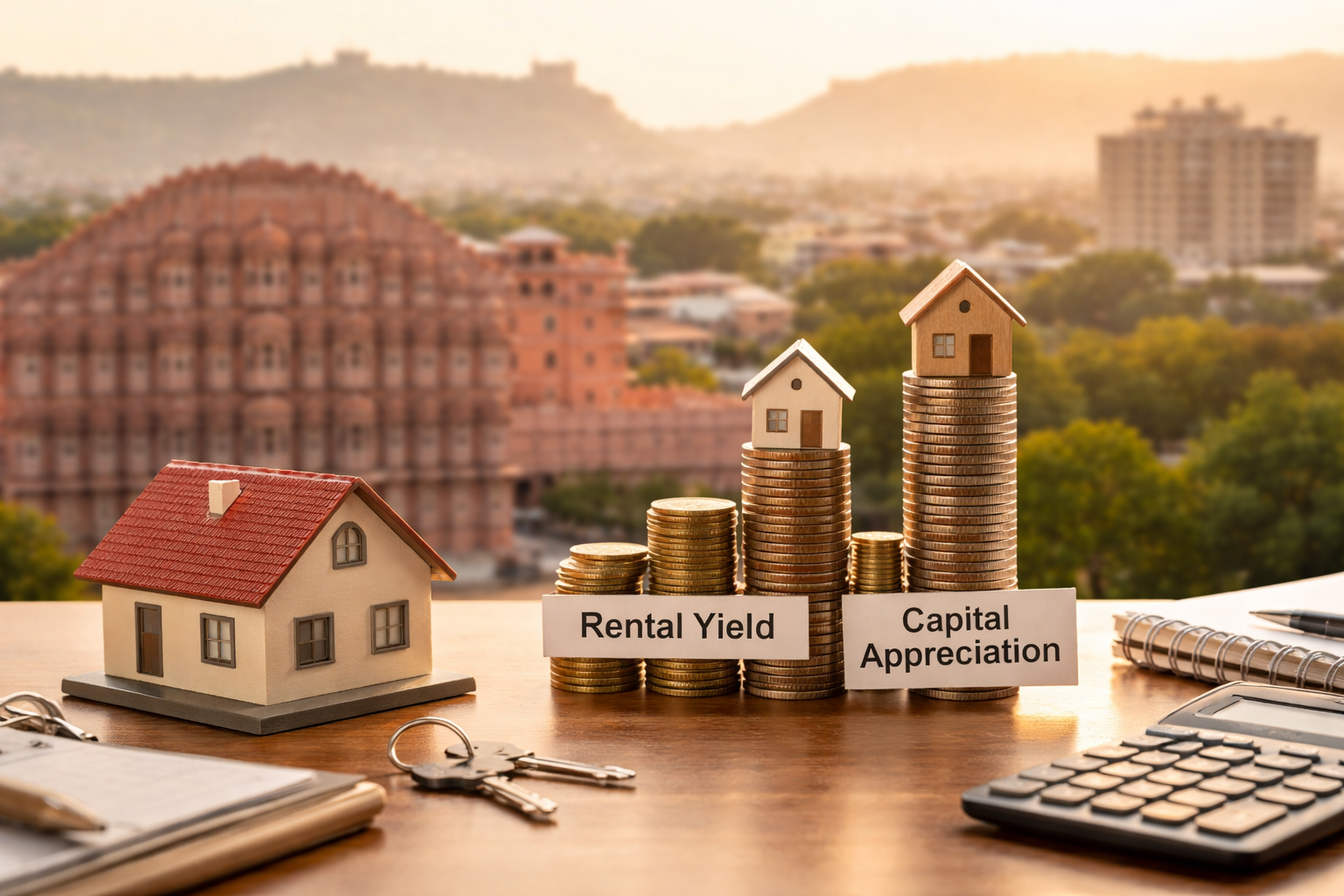
Rental Yield vs Capital Appreciation in Jaipur: What’s Better for Property Investors?

Jaipur has rapidly evolved from a cultural capital into one of North India’s most promising real estate investment destinations. With improving infrastructure, growing job opportunities, and rising housing demand, investors often face one key question:

Should you focus on rental yield or capital appreciation in Jaipur real estate?

This guide breaks it down clearly helping you decide what works best based on your goals, budget, and time horizon.

What Is Rental Yield?

Rental yield is the annual rental income generated from a property, expressed as a percentage of its purchase price.

Rental Yield Formula:

Rental Yield (%) = (Annual Rent ÷ Property Value) × 100

Jaipur Rental Yield (Current Snapshot)

  • Average rental yield: 2.5% – 4%
  • High-demand rental zones:
    • Mansarovar Extension
    • Jagatpura
    • Vaishali Nagar
    • Malviya Nagar
  • Best-performing property types:
    • 2 & 3 BHK apartments
    • Near IT parks, colleges, hospitals, and commercial hubs

Rental yield in Jaipur is considered moderate but stable, making it suitable for investors seeking regular monthly income with relatively lower risk.

Capital Appreciation Explained

Jaipur Capital appreciation refers to the increase in a property’s market value over time.

Capital Appreciation Formula:

Capital Appreciation (%) = (Current Value − Purchase Price) ÷ Purchase Price × 100

Capital Appreciation in Jaipur

Jaipur has shown strong long-term appreciation, especially in emerging corridors.

Key growth drivers:

  • Jaipur Metro expansion
  • Ring Road & Delhi–Mumbai Expressway connectivity
  • Smart City initiatives
  • Rising demand from professionals and NRIs

High Appreciation Zones in Jaipur:

  • Ajmer Road
  • Tonk Road
  • Jagatpura
  • Sikar Road
  • Mahindra SEZ belt

Historically, capital appreciation in Jaipur ranges from 6% to 10% annually in well-located projects.

Jaipur Market Comparison: Rental Yield vs Capital Appreciation

FactorRental YieldCapital Appreciation
Income TypeMonthly cash flowLong-term wealth
Risk LevelLow to mediumMedium
LiquidityRegular incomeLocked till resale
Best AreasDeveloped localitiesEmerging corridors
Ideal ForIncome-focused investorsLong-term investors

Key Insight:
Jaipur currently favors capital appreciation more than high rental yield, especially for new projects in growth zones.

Investor vs End-User Strategy

For Property Investors

  • Focus on pre-launch or early-stage projects
  • Choose locations with upcoming infrastructure
  • Accept lower initial rental yield for higher resale value
  • Ideal if you have a 5–10 year horizon

For End-Users

  • Rental yield is less important
  • Buy in livable, well-developed areas
  • Benefit from both self-use and long-term appreciation
  • Prefer ready-to-move or near-completion projects

Property ROI Calculation in Jaipur (Example)

Scenario 1: Rental-Focused Property

  • Purchase Price: ₹50 lakh
  • Monthly Rent: ₹15,000
  • Annual Rent: ₹1.8 lakh

Rental Yield:
(1.8 ÷ 50) × 100 = 3.6%

Scenario 2: Appreciation-Focused Property

  • Purchase Price: ₹50 lakh
  • Value after 7 years: ₹85 lakh

Capital Appreciation ROI:
(85 − 50) ÷ 50 × 100 = 70% total return

Clearly, capital appreciation significantly outperforms rental yield over the long term in Jaipur.

Rent vs Buy in Jaipur: What Makes More Sense?

  • Rent if you want flexibility or short-term stay
  • Buy if you plan long-term settlement or investment
  • Jaipur’s affordability compared to Delhi NCR makes buying more attractive for first-time buyers

Final Verdict: What’s Better in Jaipur?

For steady income: Rental yield
For wealth creation: Capital appreciation
Best strategy: A balanced approach buy in a growth area with decent rental demand

Jaipur real estate rewards patience and location intelligence more than short-term gains.

Why Investors Trust Reliant Housing in Jaipur

When navigating rental yield and property ROI in Jaipur, working with a knowledgeable real estate partner matters. Reliant Housing is known for helping buyers and investors identify:

  • High-growth locations in Jaipur
  • Projects with strong appreciation potential
  • Rental-friendly properties with verified demand
  • Transparent pricing and ROI-driven advice

Whether you’re an investor or an end-user, Reliant Housing provides local expertise to help you make smarter, future-ready real estate decisions in Jaipur.

Environmental & Climate Risks That Affect Property Value in Jaipur

When evaluating property value in Rajasthan especially in growing urban hubs like Jaipur it’s critical to understand how environmental and climate risks shape long-term investment potential, livability, and sustainability. From water scarcity to heat stress and flood vulnerabilities, these factors increasingly guide buyer priorities, regulatory frameworks, and sustainable design strategies.

1. Climate Risks in Rajasthan and Jaipur

Rajasthan’s climate combines intense heat, erratic monsoons, and arid conditions that significantly influence quality of life and property desirability:

Heatwaves & Urban Heat Islands

  • Jaipur experiences high temperatures, often exacerbated by urban heat island effects, where built-up areas retain more heat due to reduced vegetation and extensive concrete surfaces. This increases cooling costs and affects comfort and health for residents.

Erratic Monsoons & Extreme Weather

  • Climate variability means unpredictable rainfall patterns. While droughts remain common, heavy short bursts of rain can also cause drainage problems in poorly planned areas affecting properties not designed for adequate runoff.

Arid Climate & Desert Influence

  • Rajasthan’s natural aridity impacts groundwater recharge and soil quality, especially near fringe urban and peri-urban zones, making climate-resilient planning a valuable asset in real estate.

2. Water Scarcity Impact on Property Value

Groundwater Depletion

  • In many parts of Rajasthan, including blocks around Jaipur, groundwater levels are declining due to heavy extraction and limited recharge. This can lead to water supply issues, affecting living standards and household utility costs key considerations for property buyers.

Dried Natural Water Bodies

  • Historically, Jaipur had multiple natural rivulets and lakes. Many of these water bodies have dried or been encroached upon, worsening local heat and water stress conditions.

Impact on Property:

  • Areas with unreliable water supplies often see reduced demand and lower resale values.
  • Properties with rainwater harvesting, water recycling, and efficient plumbing systems tend to appeal more to sustainability-focused buyers.

3. Heat-Resistant and Sustainable Design in Real Estate

As climate risks grow, design strategies that enhance comfort and reduce costs are now major influencers in property valuation:

Passive Cooling & Green Design

  • Orienting buildings to maximise shade, using reflective roofing materials, and ensuring cross-ventilation reduce dependency on air conditioning.

Water Conservation Features

  • Sustainable residential developments increasingly include rainwater harvesting, greywater recycling, and drought-tolerant landscaping to counter water scarcity.

Energy Efficiency

  • Solar-ready infrastructure and energy-efficient appliances help mitigate rising electricity demands, improve comfort, and lower ownership costs.

4. Flood & Drainage Risks

Even in generally dry regions like Jaipur, flash floods and inadequate drainage can pose threats:

  • Sudden intense rainfall can overwhelm drains, especially in expanding suburbs where infrastructure development lags behind real-estate growth.
  • Sites in flood-prone low-lying areas can see reduced demand or higher insurance costs if drainage is not well designed.

Value Insight: Properties planned with stormwater management systems, permeable surfaces, and retention basins tend to hold value better over time.

5. Future-Safe Locations Within Jaipur

When choosing property in Jaipur, micro-location matters:

High-Value Zones

Fast-growing residential hubs such as Mansarovar Extension, Vaishali Nagar, and Jagatpura offer strong connectivity and infrastructure, which tends to cushion environmental risks and support capital appreciation.

Green and Elevated Areas

Properties near green belts, planned parks, and higher elevations can offer better micro-climate conditions, more shade, and reduced heat exposure.

Infrastructure-Led Growth

Areas benefiting from planned transport links and civic improvements often see stronger long-term value irrespective of broad climate pressures.

6. Sustainable Housing & Developer Practices (In Context of Reliant Housing)

Who Is Reliant Housing?

Reliant Housing is a Jaipur-based real estate developer committed to delivering quality residential projects with modern amenities and customer-centric design. Their portfolio includes residential places like Felecia, Floresta, and The Antalyas in key Jaipur localities such as Mansarovar Extension and Vaishali Nagar areas known for strong connectivity and lifestyle appeal.

Focus on Sustainability & Resilience

Reliant Housing embeds sustainable practices and future-ready features into their projects:

  • Rainwater harvesting and water-smart design to reduce dependency on stressed water resources.
  • Thoughtful orientation and ventilation to enhance passive cooling and reduce heat load.
  • Efficient water and energy systems that align with growing demand for green and resilient living spaces.
  • Use of quality materials and attention to structural standards, enhancing long-term durability and resale value.

Value-Adding Amenities

Projects by Reliant Housing offer infrastructure such as:

  • Reliable power and water backups,
  • Security and gated community living,
  • Green open spaces,
  • Strategic locations in Jaipur’s emerging residential belts all of which help mitigate environmental risk and increase market demand.

Conclusion: Environmental Risk and Property Value in Jaipur

Understanding environmental and climate risks is essential for evaluating property value in Rajasthan, especially in a city like Jaipur. Water scarcity, heat stress, erratic rains, and urban expansion all influence where and what you should invest in:

Choose locations with resilient infrastructure and planned development.
Prioritise sustainable homes with water and energy efficiency.
Assess developer approach and long-term appeal such as Reliant Housing’s focus on modern, eco-aware design.

By aligning investment decisions with environmental realities and future-proofing design principles, buyers can secure properties that are not just homes today, but valued assets tomorrow.

Real Estate Financial Planning for Homebuyers in India: A Complete Guide

Buying a home is one of the biggest financial decisions most Indians ever make. From deciding how much you can afford to strategizing your home loan, planning EMIs, and treating property as a long-term asset every step requires careful financial planning. In this guide, we’ll walk you through a practical financial roadmap so you can make confident and informed decisions while planning your dream home with developers like Reliant Housing or any reputable real estate brand.

1. How Much Home Can You Afford? Understand Your Financial Capacity

Before you start browsing properties or attending Reliant Housing site visits, the first question to ask is:

How much can you really afford without jeopardizing your financial stability?

A. Evaluate Your Current Financial Situation

Begin with a simple calculation of your:

  • Monthly net income
  • Monthly expenses
  • Existing debts
  • Savings and investments

This forms the foundation of your home loan budgeting and EMI planning India.

B. Set a Realistic Budget

A common rule of thumb:
Total home purchase price should not exceed 3–5× your annual gross income.

For example:

  • Annual income: ₹12 lakh
  • Affordable property range: ₹36 lakh – ₹60 lakh

This helps keep your EMI obligations within a comfortable range.

C. Don’t Forget Down Payment

In India, minimum down payment required by most banks is 15%–25% of the property price. For example, on a ₹50 lakh home:

  • Down payment (20%): ₹10 lakh
  • Loan amount: ₹40 lakh

This is a crucial part of home loan budgeting and sets the tone for your long-term financial plan.

2. EMI vs Income Ratio: The Golden Rule for Homebuyers

A major part of Real Estate Financial Planning is ensuring your Equated Monthly Installments (EMI) don’t strain your monthly finances.

A. What is EMI?

EMI is the fixed amount you pay every month to repay your home loan. It consists of principal + interest and is a function of:

  • Loan amount
  • Interest rate
  • Loan tenure

B. Ideal EMI to Income Ratio , India Standard

In India, most financial experts recommend:
EMI should not exceed 30%–40% of your monthly net income

Example:

  • Monthly income: ₹80,000
  • Maximum EMI: ₹24,000 – ₹32,000

Staying within this range ensures you don’t compromise on necessities, savings, or investments.

C. Why This Ratio Matters

Keeping your EMI proportionate protects you from:
✔ Overleveraging
✔ Compromised lifestyle
✔ Poor retirement savings
✔ Increased financial stress

This ratio is central to home loan budgeting and should guide property selection, whether you’re eyeing a premium Reliant Housing project or another locality.

3. Home Loan Strategy: Choose Smart to Save Big

Home loans are powerful tools, but they need to be managed smartly.

A. Choose the Right Loan Mix

Home loan strategy depends on:

  • Interest rate type (fixed vs floating)
  • Tenure
  • Pre-payment options
  • Part-payment flexibility

B. Fixed vs Floating Rates

Fixed interest rates offer predictability.
Floating rates may start lower but fluctuate with market changes.

As part of effective home loan budgeting, evaluate interest rate trends and choose the type that aligns with:
✔ Your risk tolerance
✔ Future income expectations
✔ Market outlook

C. Loan Tenure: Short vs Long

  • Long tenure (20–30 yrs) = lower EMIs but higher interest cost
  • Short tenure (10–15 yrs) = higher EMIs but lower total interest

Strike the right balance based on your capacity. This is a key part of EMI planning in India.

D. Pre-Payment & Part-Payment Strategy

Whenever you receive a bonus or windfall:

  • Consider pre-paying a part of your loan.
  • Reduces interest burden significantly.
  • Speeds up loan closure.

Many banks allow partial pre-payment without penalties always check terms before signing.

4. Property as a Long-Term Asset: More than Just a Home

In India, property is not just a place to live it is one of the most powerful long-term investment assets.

A. Real Estate Appreciation Over Time

Historically, residential property prices in key Indian cities have appreciated significantly especially in developing micro-markets and established locations. Buying early often means benefiting from capital appreciation as infrastructure and demand grow.

For example, a property bought in an emerging locality near metro lines, IT corridors, or planned business hubs often outperforms expectations.

B. Rental Income Potential

If you ever decide to move, your property can generate steady rental income turning a fixed asset into a recurring revenue source. This is central to property investment planning.

C. Tax Benefits on Home Loans

India offers tax deductions under:

  • Section 80C – principal repayment
  • Section 24(b) – interest on home loan

These benefits reduce your tax liability and enhance overall returns from your investment.

D. Selecting the Right Developer Matters

Choosing a reputed developer with strong delivery track record, like Reliant Housing, adds confidence to your investment. Quality construction, timely delivery, and trusted certifications ensure your property gains value over time and attracts a good resale or rental price.

5. Real Estate & Retirement Planning: An Overlooked Advantage

Many Indians underestimate the role property plays in retirement planning. But with thoughtful planning, your home can secure your golden years.

A. Clearing Home Loan Before Retirement

Aim to close your home loan before retirement so your fixed income isn’t burdened by EMIs. A loan-free home reduces monthly expenses significantly when income reduces.

B. Rental Income as Retirement Income

If you choose to downsize later:
✔ Sell a part of the property
✔ Rent the existing property
✔ Use rental proceeds for monthly expenses

This becomes a key component of retirement income planning.

C. Reverse Mortgage Option

Once you’re above 60, many banks offer reverse mortgage loans. This allows senior citizens to:

  • Convert home equity into monthly income
  • Continue living in the house

This strategy injects stability into retirement finances.

6. Practical Homebuyer Checklist: Be Financially Ready

Here’s a step-by-step checklist to streamline your financial plan:

A. Pre-Purchase Phase

✔ Assess income & expenses
✔ Calculate affordable budget
✔ Check CIBIL score (aim for 750+)
✔ Decide down payment capability
✔ Compare interest rates & loan options
✔ Visit projects like Reliant Housing and shortlist

B. Loan Application Phase

✔ Get pre-approved loan offer
✔ Read fine print carefully
✔ Calculate EMIs using online EMI calculators
✔ Lock interest rate if beneficial

C. Post Loan Disbursement

✔ Begin EMI payments on time
✔ Set up auto-debit
✔ Plan annual pre-payments
✔ Track property appreciation

7. Avoid These Common Homebuyer Mistakes

To strengthen your property investment planning:

❌ Buying beyond affordability
❌ Ignoring hidden costs (stamp duty, registration, taxes)
❌ Choosing longest tenure without strategy
❌ Not comparing loan offers
❌ Overlooking future income changes

Avoiding these protects your financial future.

8. Conclusion: Plan Smart, Live Happy

Real estate financial planning isn’t just about buying a roof over your head , it’s about securing your future. With disciplined home loan budgeting, thoughtful EMI planning in India, and smart investment foresight, your property can become one of your strongest financial assets.

Whether it’s your first home, an upgrade, or an investment property near good locations developed by reliable names like Reliant Housing, thoughtful financial planning ensures:

  • Peace of mind today
  • Financial security tomorrow
  • A valuable legacy for your family

Best Floor & Direction for Flats | Vastu Floor Selection Guide 2026

Buying a flat is one of the biggest financial and emotional decisions in life. Beyond price, location, and amenities, two factors strongly influence long term satisfaction and resale value: floor selection and flat direction. Many Indian buyers search for the best floor to buy a flat while also considering vastu direction for flat layouts, especially north facing flat benefits.

This detailed guide combines Vastu principles with practical urban living insights, helping you choose the right floor and direction for comfort, health, and future appreciation.

Importance of Floor Selection in Flats

Floor selection is not only about view or prestige. It impacts ventilation, noise levels, safety, maintenance, and even daily lifestyle convenience. Lower floors usually provide easy access, while higher floors offer privacy and better air circulation. However, the best floor to buy a flat depends on personal needs, family structure, and city conditions.

From an investment perspective, mid to higher floors often command better resale prices in metro cities. Families with elders or small children may prefer lower to mid floors for safety and accessibility. Understanding these differences helps buyers make an informed floor selection guide instead of choosing randomly.

Vastu for Flat Direction Explained Simply

Vastu Shastra focuses on balancing natural elements like sunlight, airflow, and energy direction. While modern apartments have fixed structures, direction still plays a major role. The vastu direction for flat determines how sunlight enters, how air circulates, and how positive energy flows.

According to Vastu, north and east facing flats are considered most auspicious. They receive ample natural light and are associated with prosperity and good health. South and west facing flats are not bad, but they require careful planning of interiors and entrances.

North Facing Flat Benefit

Among all options, north facing flat benefits are widely discussed. A north facing flat receives consistent daylight without harsh heat, making it energy efficient and comfortable throughout the year. According to Vastu, the north direction is ruled by Kubera, the god of wealth, symbolizing financial growth and stability.

Practically, north facing flats stay cooler during Indian summers and reduce electricity usage for cooling. They are ideal for home offices, students, and families seeking a calm living environment. Because of high demand, such flats also enjoy better resale value.

East Facing Flats and Morning Energy

East facing flats allow early morning sunlight, which is considered highly positive in Vastu. Exposure to morning rays supports better health, sleep cycles, and productivity. Many buyers prefer east facing flats for spiritual reasons, especially those who follow daily rituals or meditation routines.

However, in very hot cities, east facing flats may become warm early in the day. Proper balconies, curtains, and ventilation planning can solve this issue, making them a strong alternative to north facing units.

South and West Facing Flats Reality Check

There is a common myth that south or west facing flats are always inauspicious. In reality, vastu direction for flat should be evaluated with layout, entrance placement, and room usage. South facing flats can be excellent if the kitchen, bedrooms, and entrances follow correct vastu alignment.

West facing flats often provide beautiful sunset views and are suitable for people who return home late in the evening. With modern insulation, reflective glass, and smart design, heat concerns can be managed effectively.

Higher vs Lower Floors: Practical Comparison

Choosing between higher vs lower floors is a key part of the floor selection guide. Higher floors offer better views, less street noise, more privacy, and improved air quality. They are ideal for professionals, couples, and investors focused on premium living.

Lower floors provide convenience, faster evacuation, and easier access during power outages. Families with elderly members often prefer lower floors due to reduced dependency on lifts. Security, parking proximity, and garden access are also advantages.

Mid Floors: The Balanced Choice

For many buyers, mid floors represent the best floor to buy a flat. They balance accessibility with privacy, reduce noise, and still provide decent views. Mid floors are also safer during emergencies compared to very high floors and remain cooler than top floors.

From a resale perspective, mid floors appeal to a wider buyer segment, making them a practical long term investment option in most residential projects.

Climate Considerations in India

Climate plays a major role in deciding the best floor and direction. In hot regions like Rajasthan or Gujarat, north and east facing flats on mid floors remain cooler. In humid coastal cities, higher floors help avoid dampness and mosquitoes while improving ventilation.

In colder regions, south facing flats may provide better warmth. Understanding local climate patterns ensures that vastu principles align with practical comfort instead of working against it.

Noise, Pollution, and Safety Factors

Lower floors near busy roads may experience more noise and dust. Higher floors are quieter but may feel isolated for some residents. Safety is another concern. While higher floors reduce theft risk, emergency evacuation becomes more challenging.

Modern projects by trusted developers like Reliant Housing address these concerns with advanced safety systems, soundproofing, fire compliance, and efficient lift management, making floor choice more flexible.

Investment and Resale Value Perspective

From an investment viewpoint, direction and floor both influence property value. North and east facing flats usually appreciate faster due to higher demand. Premium floors with open views attract luxury buyers and tenants.

However, affordability matters. A well planned mid floor west or south facing flat in a quality project can outperform poorly designed north facing units. Project quality, builder reputation, and location remain equally important.

Buyer Recommendations for Smart Decision

Before finalizing, visit the flat at different times of day. Observe sunlight, airflow, and noise levels. Ask about lift backup, fire safety, and maintenance plans. Use a realistic floor selection guide instead of relying only on myths.

If vastu direction for flat is important to you, consult a professional but also evaluate practical lifestyle needs. A balanced approach leads to long term satisfaction

Common Mistakes Buyers Should Avoid

Many buyers rush decisions based only on direction labels without checking actual site conditions. A north facing flat blocked by another tower may receive less light than expected. Similarly, top floor flats without proper insulation can become extremely hot. Ignoring these realities leads to regret later.

Another mistake is ignoring future surroundings. An open view today might disappear after nearby development. Always check the master plan and surrounding zoning. Lift count, maintenance quality, and society rules matter as much as floor number.

Legal and Documentation Considerations

While choosing the best floor to buy a flat, ensure that the floor is legally approved in building plans. Unauthorized floors or modified layouts can cause issues during registration or resale. Always verify occupancy certificates, fire clearances, and structural approvals.

Banks also prefer lending on floors and units that comply with sanctioned plans. A vastu perfect flat loses value if documentation is weak. Reputed developers like Reliant Housing follow strict compliance, reducing such risks.

Lifestyle Based Floor Selection

Working professionals may prefer higher floors for quiet evenings and scenic views. Families with children might enjoy lower floors with easier access to play areas. Senior citizens often feel comfortable on lower or mid floors with quick exit options.

Your daily routine should guide your decision more than trends. Think about groceries, parking access, pet movement, and emergency response. The right choice improves quality of life every single day.

Long Term Living Comfort

A flat is not just an investment but a living space for years. Balanced sunlight, good ventilation, manageable noise, and easy access contribute to mental and physical wellbeing. When vastu principles align with practical design, the result is harmonious living.

Choosing wisely today ensures peace of mind tomorrow, making your home a source of stability, growth, and happiness. Ultimately, informed decisions create better homes. Combine vastu wisdom, modern planning, and trusted builders to secure a flat that supports comfort, prosperity, and long term value for your family always with confidence today.

Role of Trusted Developers

Choosing the right floor and direction becomes easier when the project is thoughtfully designed. Developers like Reliant Housing integrate Vastu friendly layouts with modern architecture, ensuring optimal ventilation, safety, and comfort across floors.

Their projects focus on real life usability rather than just brochure claims, helping buyers find the best floor to buy a flat without compromise.

Final Thoughts

There is no single perfect answer for everyone. The best floor to buy a flat depends on family needs, budget, climate, and lifestyle. Vastu provides guidance, while practical considerations ensure daily comfort. By understanding north facing flat benefits, comparing higher vs lower floors, and considering climate impact, buyers can make confident decisions. A well chosen flat becomes not just a home but a long term asset.

If you are planning to buy a home and want expert guidance on floor selection, vastu direction for flat planning, and investment value, explore residential projects by Reliant Housing. Their customer focused approach and future ready designs help you choose a home that truly fits your life.

Your dream home
is just a call away

For Booking Call +91 9057833000

whatsapp