

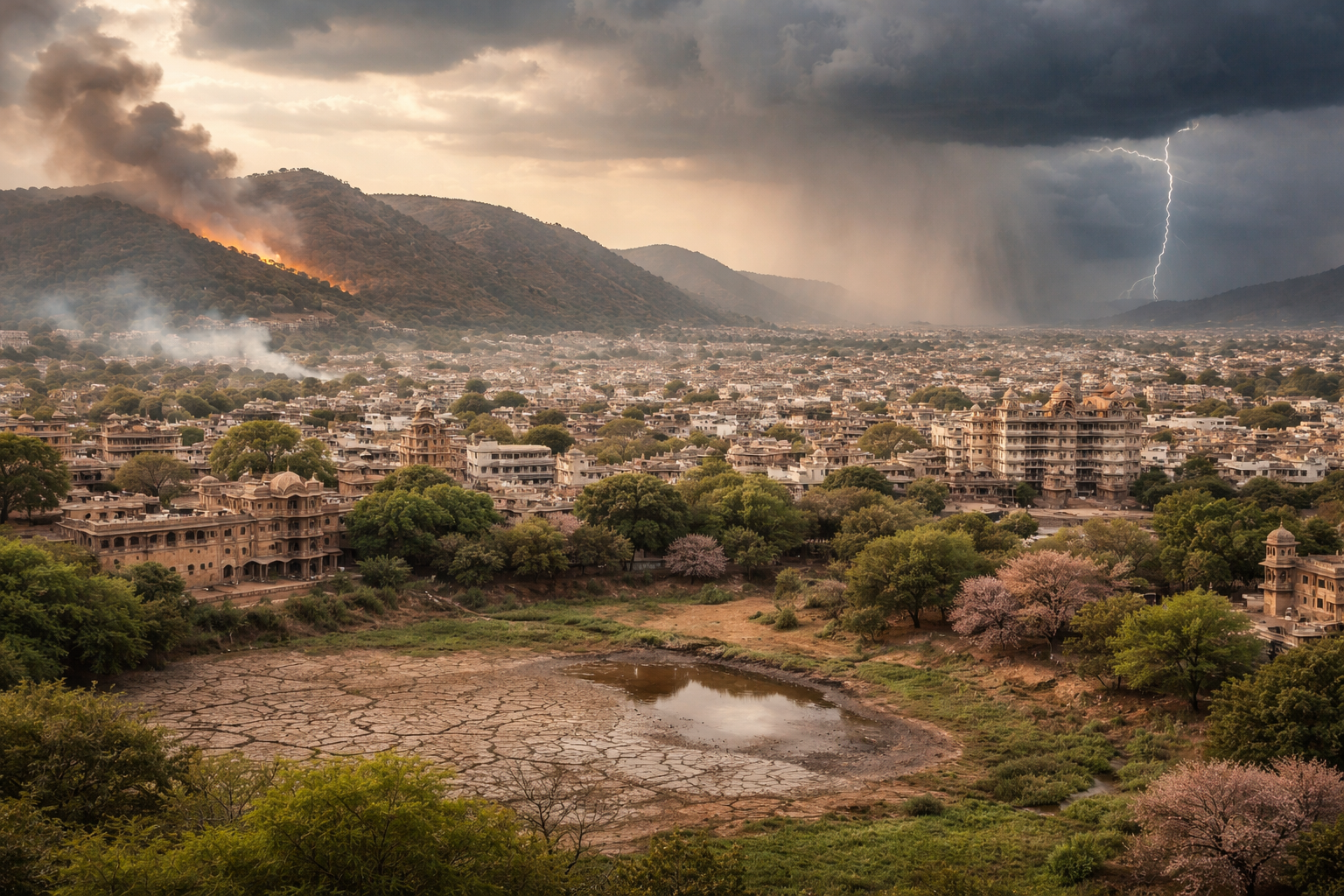
Environmental & Climate Risks That Affect Property Value in Jaipur
When evaluating property value in Rajasthan especially in growing urban hubs like Jaipur it’s critical to understand how environmental and climate risks shape long-term investment potential, livability, and sustainability. From water scarcity to heat stress and flood vulnerabilities, these factors increasingly guide buyer priorities, regulatory frameworks, and sustainable design strategies.
1. Climate Risks in Rajasthan and Jaipur
Rajasthan’s climate combines intense heat, erratic monsoons, and arid conditions that significantly influence quality of life and property desirability:
Heatwaves & Urban Heat Islands
- Jaipur experiences high temperatures, often exacerbated by urban heat island effects, where built-up areas retain more heat due to reduced vegetation and extensive concrete surfaces. This increases cooling costs and affects comfort and health for residents.
Erratic Monsoons & Extreme Weather
- Climate variability means unpredictable rainfall patterns. While droughts remain common, heavy short bursts of rain can also cause drainage problems in poorly planned areas affecting properties not designed for adequate runoff.
Arid Climate & Desert Influence
- Rajasthan’s natural aridity impacts groundwater recharge and soil quality, especially near fringe urban and peri-urban zones, making climate-resilient planning a valuable asset in real estate.
2. Water Scarcity Impact on Property Value
Groundwater Depletion
- In many parts of Rajasthan, including blocks around Jaipur, groundwater levels are declining due to heavy extraction and limited recharge. This can lead to water supply issues, affecting living standards and household utility costs key considerations for property buyers.
Dried Natural Water Bodies
- Historically, Jaipur had multiple natural rivulets and lakes. Many of these water bodies have dried or been encroached upon, worsening local heat and water stress conditions.
Impact on Property:
- Areas with unreliable water supplies often see reduced demand and lower resale values.
- Properties with rainwater harvesting, water recycling, and efficient plumbing systems tend to appeal more to sustainability-focused buyers.
3. Heat-Resistant and Sustainable Design in Real Estate
As climate risks grow, design strategies that enhance comfort and reduce costs are now major influencers in property valuation:
Passive Cooling & Green Design
- Orienting buildings to maximise shade, using reflective roofing materials, and ensuring cross-ventilation reduce dependency on air conditioning.
Water Conservation Features
- Sustainable residential developments increasingly include rainwater harvesting, greywater recycling, and drought-tolerant landscaping to counter water scarcity.
Energy Efficiency
- Solar-ready infrastructure and energy-efficient appliances help mitigate rising electricity demands, improve comfort, and lower ownership costs.
4. Flood & Drainage Risks
Even in generally dry regions like Jaipur, flash floods and inadequate drainage can pose threats:
- Sudden intense rainfall can overwhelm drains, especially in expanding suburbs where infrastructure development lags behind real-estate growth.
- Sites in flood-prone low-lying areas can see reduced demand or higher insurance costs if drainage is not well designed.
Value Insight: Properties planned with stormwater management systems, permeable surfaces, and retention basins tend to hold value better over time.
5. Future-Safe Locations Within Jaipur
When choosing property in Jaipur, micro-location matters:
High-Value Zones
Fast-growing residential hubs such as Mansarovar Extension, Vaishali Nagar, and Jagatpura offer strong connectivity and infrastructure, which tends to cushion environmental risks and support capital appreciation.
Green and Elevated Areas
Properties near green belts, planned parks, and higher elevations can offer better micro-climate conditions, more shade, and reduced heat exposure.
Infrastructure-Led Growth
Areas benefiting from planned transport links and civic improvements often see stronger long-term value irrespective of broad climate pressures.
6. Sustainable Housing & Developer Practices (In Context of Reliant Housing)
Who Is Reliant Housing?
Reliant Housing is a Jaipur-based real estate developer committed to delivering quality residential projects with modern amenities and customer-centric design. Their portfolio includes residential places like Felecia, Floresta, and The Antalyas in key Jaipur localities such as Mansarovar Extension and Vaishali Nagar areas known for strong connectivity and lifestyle appeal.
Focus on Sustainability & Resilience
Reliant Housing embeds sustainable practices and future-ready features into their projects:
- Rainwater harvesting and water-smart design to reduce dependency on stressed water resources.
- Thoughtful orientation and ventilation to enhance passive cooling and reduce heat load.
- Efficient water and energy systems that align with growing demand for green and resilient living spaces.
- Use of quality materials and attention to structural standards, enhancing long-term durability and resale value.
Value-Adding Amenities
Projects by Reliant Housing offer infrastructure such as:
- Reliable power and water backups,
- Security and gated community living,
- Green open spaces,
- Strategic locations in Jaipur’s emerging residential belts all of which help mitigate environmental risk and increase market demand.
Conclusion: Environmental Risk and Property Value in Jaipur
Understanding environmental and climate risks is essential for evaluating property value in Rajasthan, especially in a city like Jaipur. Water scarcity, heat stress, erratic rains, and urban expansion all influence where and what you should invest in:
Choose locations with resilient infrastructure and planned development.
Prioritise sustainable homes with water and energy efficiency.
Assess developer approach and long-term appeal such as Reliant Housing’s focus on modern, eco-aware design.
By aligning investment decisions with environmental realities and future-proofing design principles, buyers can secure properties that are not just homes today, but valued assets tomorrow.

 Plot No. 16 B, Scheme 4-S, New Loha Mandi Road, Harmada-302013, Jaipur
 +91 9057833000
 info@relianthousing.in
 2025 Reliant Housing By