

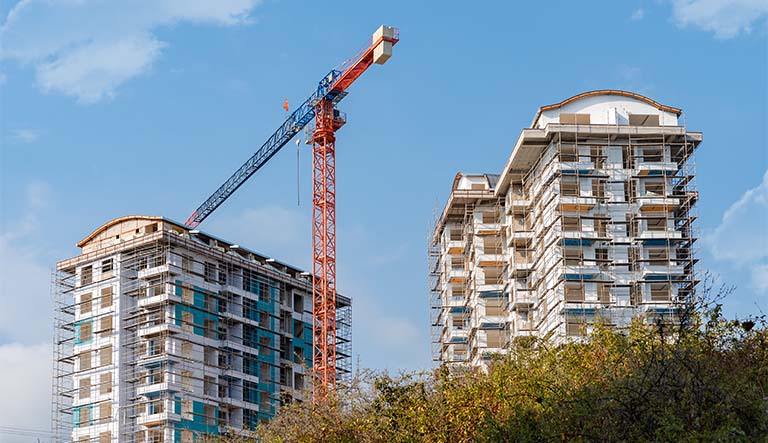
Under Construction vs Ready to Move-in Flats
If you’re thinking of buying a home, you’ve probably encountered two main options: under-construction properties and ready to move-in homes. Each has its own benefits, drawbacks, and risk profile. The key is to align your choice with your budget, timeline, risk appetite, and investment goals.
In this blog, we’ll deeply explore Under Construction vs Ready to Move-in Flats, define each, compare them, review pros and cons, highlight risks, and give you actionable tips so you can confidently decide. Let’s go.
What Is an Under Construction Flats?
An under construction flats (or under-construction property) refers to a residential unit or complex that is currently in the building phase and is not yet ready for occupation. You book or purchase the property in advance (during launch, foundation, mid-construction, or pre-completion stages), make payments in stages (often tied to construction milestones), and wait for possession when the developer completes the work.
Some key traits:
- You purchase before full completion — sometimes even before structural work begins.
- You often get flexible payment plans (construction-linked payments).
- There is potential for price appreciation as the project progresses.
- There is some degree of risk (delay, change in plan, cost escalation).
Many builders use under-construction projects for new developments or for expansion to new localities. Real estate blogs and developers repeatedly caution buyers to scrutinize the builder’s credibility when going this route. Wikipedia
What Is a Ready to Move Flats?
A ready to move Flats (or ready-to-move property) is one in which construction is fully completed, all statutory clearances are obtained (including occupancy certificate, if required), and possession is available immediately or very soon.
Characteristics:
- You can physically inspect the finished property, amenities, finishes, and surroundings before you commit.
- There is no waiting period — you can move in or rent out right away.
- The scope for customizing layouts is minimal (since the structure is complete).
- Because risk is lower, pricing per square foot tends to be higher.
“For instance, projects by developers such as Reliant Housing in Jaipur offer phased payment options and clear RERA registration for under-construction properties.”
What Is the Difference Between Under Construction and Ready to Move in Flats?
To understand Under Construction vs Ready to Move In in clear terms, here is a comparative view across key parameters:
| Factor / Feature | Under Construction Flats | Ready to Move-in Flats |
| Possession / Occupancy | Future (months or years ahead) | Immediate or very soon |
| Payment Schedule | Phased payments tied to progress | Usually full payment or immediate loan disbursement |
| Pricing | Lower per sq.ft (often 10–30% less) | Higher, due to completion and zero risk |
| GST / Taxes | GST applicable (5% for many residential) | Generally exempt (if project is complete) |
| Customisation | Possible during construction | Very limited, mostly post-purchase renovation |
| Risk & Delays | Higher risk — delays, changes, developer issues | Lower risk — you see finished product |
| Rental Income / Cash Flow | Begins only after possession | Can start immediately (if buyer wishes) |
| Inspection / Quality Check | You rely on developer promises, sample flats | You inspect the actual unit, finishes, quality |
| Appreciation Potential | Potentially higher (especially in growth areas) | More stable / moderate appreciation |
| Legal / Approval Certainty | Needs careful due diligence on approvals, title | Many approvals already in place; less ambiguity |
This table gives a snapshot of the main differences.
Under-construction Flats vs Ready To Move In: Explanation
Let’s dig deeper into this comparison by discussing aspects that influence your decision in real life.
Cost & Pricing Differences
- Under construction properties are normally cheaper per square foot, especially in the early stages. Builders often launch with lower prices to attract early buyers.
- Ready to move homes command a premium due to the certainty and zero waiting.
- However, in under-construction projects, additional costs — like escalation charges, development fees, or hidden charges — may appear later.
- Also, GST (5% or other slab) may apply to under-construction homes, potentially narrowing the effective price gap.
Time / Delay / Possession Risk
- Under-construction properties carry the risk of delay. Even with RERA, many projects get delayed due to labor shortages, regulatory hurdles, funding problems, or supply chain issues.
- Ready homes eliminate that delay risk — what you are buying is already built.
Customization & Flexibility
- In under-construction projects you may be able to influence layout changes, interiors during certain stages (depending on developer).
- Ready homes have fixed structure; customization mostly limited to internal finishes (paint, fixtures).
Rental / Income / Cash Flow
- Ready homes let you generate rental income immediately (if you’re an investor).
- Under-construction homes require waiting until possession before earning returns.
Transparency & Inspection
- With ready homes, you see the actual unit, local surroundings, amenities, quality of finishes, roads, neighborhood.
- In under-construction, much is on paper, promises, show flats — risk of deviation from promotional materials.
Appreciation & Investment Potential
- Under-construction often offers better upside in emerging locations: as infrastructure develops, the value may rise significantly.
- Ready homes in established areas appreciate steadily, though growth may be more modest.
Tax, Loan & Regulatory Aspects
- Both property types allow home loan funding, but lenders may be more comfortable with ready-to-move properties.
- Tax benefits (interest deduction, principal deduction) are typically claimable only after possession (for under-construction).
- Under-construction properties attract GST; ready homes generally are exempt from GST if they have occupancy certificate.
- Under-construction projects must abide by RERA timelines, disclosures, etc. The Real Estate Regulatory Authority has added buyer protections, but one still has to check compliance.
Thus, the choice is nuanced: risk vs reward, timeline vs patience, certainty vs potential.
Disadvantages of an Under-Construction Property
Here are the key disadvantages you should be aware of:
- Possession Delays
Projects may be delayed — sometimes significantly. This may force you to pay rent and loan EMIs simultaneously. - Escalation & Hidden Charges
Builders may levy escalation clauses, development charges, parking charges, or changes in specification not covered in the initial agreement. - Quality & Design Changes
Promised amenities or designs may differ in the final delivered project. - Market Fluctuations
Over the development period, market conditions may change, resulting in lower than expected appreciation or even depreciation. - Risk of Project Abandonment
In extreme cases, a developer may default or abandon the project due to financial issues. - Delayed Returns / Cash Flow Gap
Since you can’t rent until possession, there is a gap between investment and returns. - Regulatory & Legal Risk
If clearances (land title, environmental, approvals) are not properly secured, you may face legal issues. - Interest Payment During Construction (Pre-EMI)
During construction, you usually pay only interest (pre-EMI), not the full EMI, but that adds to your cost.
The Silent Risks of an Under-construction Property
Beyond the obvious shortcomings, there are silent or hidden risks that many buyers overlook:
- Liquidity Risk / Resale Challenges Before Possession
Although you can resell under-construction, finding buyers mid-construction can be harder, and margins may be thin. - Builder Credit & Financial Health
If the developer’s finances are weak, progress may stall or quality compromised. - Changes in Regulatory Norms or Statutes
Changes in laws, zoning, taxes, or construction norms can impact project viability or cost. - Infrastructure & Surrounding Development Delays
Promised roads, connectivity, or amenities in the locality may get delayed, reducing overall livability and value. - Interest Rate Changes / Financing Risk
Over long durations, interest rates might increase, affecting loan burden or affordability. - Inflation & Rising Material Costs
Costs of raw materials might rise during construction, which may force the developer to levy additional price escalation on you. - Documentation Shortcomings or Hidden Encumbrances
Land disputes, pending litigation, or lack of clear title may surface later. - Delayed Approvals / Legal Bottlenecks
If final clearances, occupancy certificates are delayed or withheld, you might not be allowed to occupy legally.
These risks make it essential to perform rigorous due diligence before investing in under-construction properties.
Advantages of Ready To Move in Property
Choosing a ready to move-in property offers several advantages:
- Immediate Possession / Zero Waiting
You don’t wait for construction to wrap up — move in right away or rent it out. - No Delay Risk
Since construction is complete, you avoid uncertainties of delay, legal hurdles in construction, etc. - Transparent Inspection
You can personally inspect the unit, test utilities, roads, neighbor behavior, amenities, and verify the quality of finishes. - Stable Cash Flow / Rental Income
For investors, rental returns can begin almost instantly. - No GST / Lower Tax Burden
Ready-to-move properties (with OC) are typically exempt from GST, making the cost structure cleaner. - Better Financing / Loan Approval Chances
Lenders often prefer completed assets; approvals and disbursement are simpler. - Reduced Risk
Fewer uncertainties in terms of construction, defaults, or deviations. - Predictability
What you sign up for is what you’ll get — less scope for surprises or negative deviations.
These advantages make ready homes attractive, especially for risk-averse buyers or those needing immediate occupancy.
Disadvantages of a Ready-to-Move-in Property
However, ready-to-move homes also have tradeoffs. Here are the disadvantages:
- High Upfront Cost / Premium Price
You pay a premium for certainty and immediacy. - Limited Negotiation Flexibility
Less scope for major discounts or price negotiation compared to under-construction deals. - Minimal Customisation
Structural layout and finishes are fixed; you may only change minor fixtures or décor. - Possibly Older Inventory / Wear & Tear
If the building is a few years old, maintenance issues may emerge. - Lower Appreciation Potential (in some cases)
Much of the property’s value is already realized, so the upside may be somewhat lower than in emerging projects. - Choice Constraints
You may have fewer units left (in good floors/facing) to pick from. - Immediate Full Payment / Loan Burden
Your financial burden begins immediately; no deferment via milestone payments. - Potential Hidden Defects / Maintenance Issues
Since the property is already built, defects in plumbing, wiring, finishes may exist which require repair.
Thus, while ready homes offer peace of mind, they come at a cost and with fewer flexibilities.
Things to Keep in Mind While Evaluating Under Construction vs Ready To Move In Flats
To make a wise decision, keep these critical factors in mind:
- Developer / Builder Credibility & Track Record
Examine past projects, delivery record, customer reviews, litigation history. - Legal Clearances & Paperwork
Ensure land title, building approvals, environmental clearances, RERA registration, occupancy certificate (for ready homes), etc. - RERA Registration / Compliance
For under-construction projects, RERA compliance is mandatory and gives you legal recourse for delays. - Possession Timeline & Delay Penalties
Make sure the agreement has clear clauses for delay, penalty, compensation, etc. - Payment Plan & Escalation Clauses
For under-construction, check for escalation charges, hidden costs. For ready homes, ensure all dues are transparent. - Amenities & Infrastructure Implementation
For under-construction, confirm that promised amenities (clubhouse, roads, landscaping) will be delivered. Evaluate locality infrastructure, connectivity. - Inspection & Quality Assurance
In ready homes, inspect finishes, plumbing, wiring, alignment, etc. In under-construction, check for building materials, structural plans, sample flats. - Budget Buffer & Contingencies
Always keep a buffer for escalation, maintenance, or delay-related costs. - Loan & Tax Implications
Understand implications for home loan approval, interest, pre-EMI, and when you can claim deductions. - Resale / Liquidity Prospects
Evaluate the demand for your property type and where resale buyers may come from, even mid-construction. - Market / Location Dynamics
Study the locality’s growth prospects, upcoming infrastructure projects, accessibility to essentials (schools, hospitals, transit). - Visit the Site / Neighborhood
Go physically to the site, observe surroundings, traffic, future development. - Check Buyer Rights & Dispute Resolution Mechanism
Ensure your agreement allows for remedies if developer defaults; RERA or other grievance forums should be accessible.
By thoroughly vetting these factors, you can reduce risk and make an informed choice.
Conclusion : Under Construction vs Ready to Move Homes
So, which is better — under construction or ready to move in? The answer: it depends on your priorities.
- If you need immediate possession, low risk, certainty, rental income right away, then a ready-to-move home is the safer bet.
- If you can wait, want flexibility, lower entry cost, and aim for higher appreciation, then an under-construction property may deliver better returns — provided you choose the right project and builder with strict due diligence.
Here’s a simplified decision matrix:
| Your Profile / Goal | Go for Ready to Move In | Go for Under Construction |
| Need to move ASAP | ✔ | — |
| Risk-averse | ✔ | — |
| Want immediate rental income | ✔ | — |
| Budget constrained / want phased payments | — | ✔ |
| Can wait for 2–5 years | — | ✔ |
| Looking for higher appreciation in future | Potential | ✔ |
| Want customization flexibility | Limited | ✔ |
In conclusion, there is no one-size-fits-all. The “better” option is the one aligned with your time horizon, finances, risk tolerance, and investment strategy.
FAQ’s
Answer: Both have advantages — ready-to-move flats offer immediate possession, no waiting period, and zero construction risk. Under-construction flats are usually cheaper, come with modern designs, and can give higher returns once completed. The best choice depends on your budget, purpose (investment or living), and time frame.
Answer: Yes, under-construction flats are typically 10–20% cheaper than ready-to-move properties in the same area. Developers often offer early-bird discounts, flexible payment plans, and pre-launch offers, making them ideal for long-term investors.
Answer: Main risks include project delays, quality issues, and legal disputes. Always check if the project is RERA-registered, verify the builder’s track record, and review construction timelines before investing. This ensures safety and transparency.
Answer: Homebuyers prefer ready-to-move flats because they offer immediate possession, no GST, and the assurance of what you see is what you get. It’s perfect for end-users who want to avoid waiting periods and rental expenses.
Answer: Under-construction flats generally offer better ROI due to lower entry prices and value appreciation during the construction phase. However, ready-to-move flats provide instant rental income and lower risk, ideal for short-term stability seekers.







 Plot No. 16 B, Scheme 4-S, New Loha Mandi Road, Harmada-302013, Jaipur
 +91 9057833000
 info@relianthousing.in
 2025 Reliant Housing By